

Vachellia sieberiana woodii

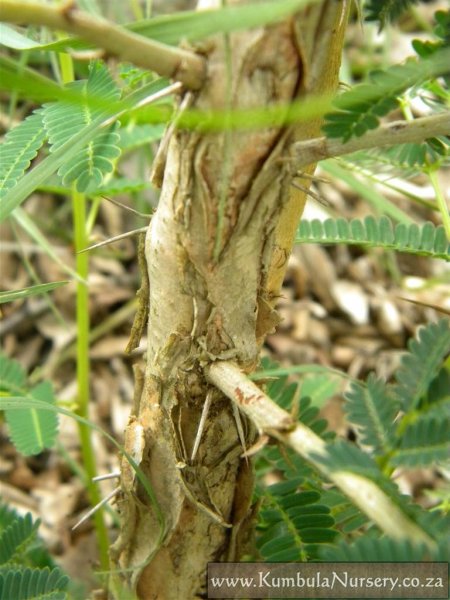
| Botanical Name | Vachellia sieberiana woodii |
|||||||||||
| Family | Fabaceae - The legume and pod-bearing family. (Pea & Bean Family) |
|||||||||||
| Pronunciation | vak-ELL-ee-uh sy-ber-ee-AH-nuh variety WOOD-ee-eye |
|||||||||||
| Common Name(s) |
English: Paperbark thorn
Afrikaans: Papierbasdoring
IsiZulu: umKhamba
Sesotho sa Leboa: Mphoka
Setswana: Mokha; Morumosetlha
Xitsonga: Nkowankowa
Tshivenda: Musaunga
siSwati: umNganduzi
|
|||||||||||
| Plant Group |
|
|||||||||||
| Plant Size |
|
|||||||||||
| Position |
|
|||||||||||
| General Information |
|
|||||||||||
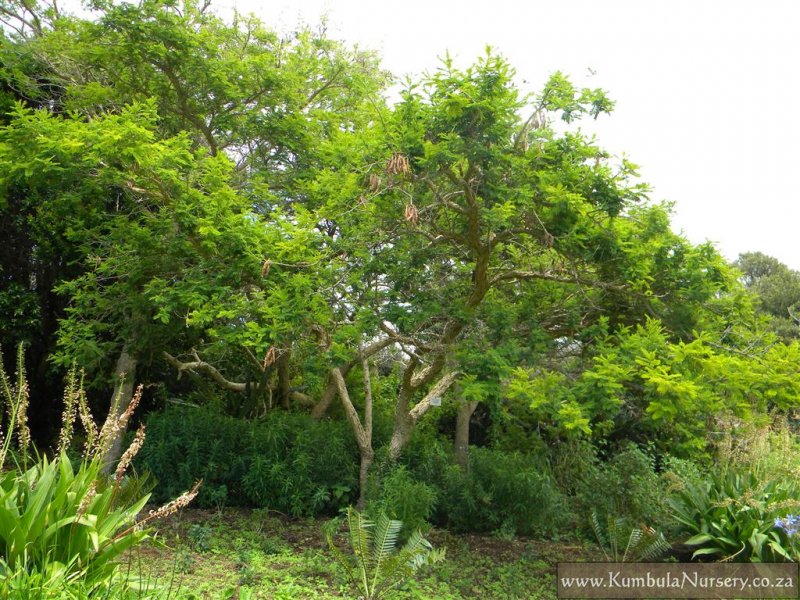
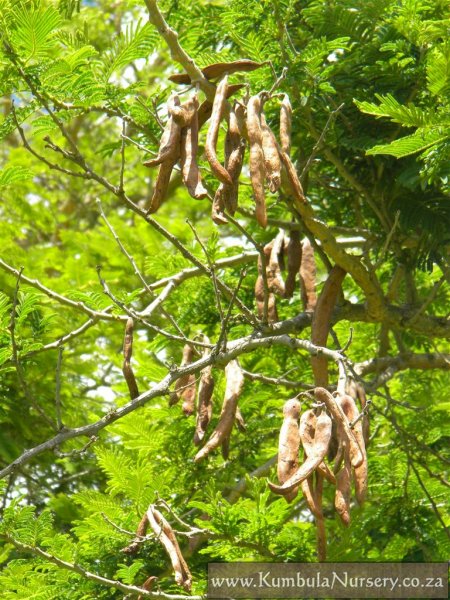
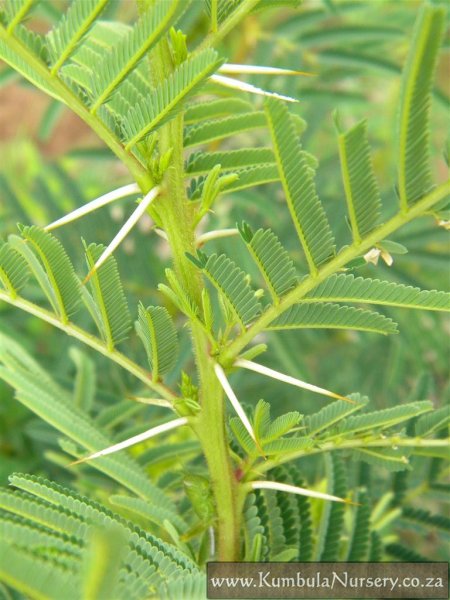
| Specific Information | With its dense, widely spreading foliage, a flattened crown and flaking bark, Vachellia Sieberiana is easily identified. The fluffy, scented blooms are conspicuous against the deep green, feathery foliage. The papery bark is exceptionally attractive and peels off in flattish strips, displaying yellow under bark. The bark is highly inflammable and sensitive to fire, (so perhaps its best not to build a braai under it). This tree will remain evergreen in a moist habitat but in cooler or drier parts it is more usually semi- or completely deciduous. Absent at times, the paired, white thorns are joined at the base and grow up to 100mm in length. The light brown pods, which have a musty or fruity smell and are 100 to 200 mm long, ripen in autumn. A desirable nesting site for many birds, Vachellia Sieberiana is veritable supermarket for a variety of birds, beetles, butterflies, bees and other bugs. |
|||||||||||
| Ad Break | ||||||||||||
| Flowers | ||||||||||||
| Description | fluffy balls 1 - 1,5 cm in diameter |
|||||||||||
| Season |
|
|||||||||||
| Colour |
|
|||||||||||
| Growth Rate |
|
|||||||||||
| Plant Uses |
|
|||||||||||
| Distribution and Habitat | from KwaZulu-Natal to Mpumalanga and the Northern Province in South Africa, as well as Swaziland, Zimbabwe, Botswana and northern Namibia, and tropical parts of Africa up to Ethiopia, in bush veld (woodland), wooded grassland, along river banks and on flood plains |
|||||||||||
| Planting Suggestions | The crown of Vachellia Sieberiana spreads up to 16 meters across in prime locations. Before planting the tree, make sure that you have enough room for it to spread without interfering with surrounding structures. Water well for at least the first year for very fast growth - approximately 1 ½ meters per year if consistently watered. Protect from frost for the first two to three years. The old method of digging a deep hole and filling it with soil and compost has resulted in many trees failing to thrive, dying, rotting at the base or worse still, falling over in later years due to poor root development. Refer to the following sites for the best method of planting trees: International Society of Arboriculture: New Tree Planting Tree People: Plant the right way For those of you who have a clay problem try: |
|||||||||||
| Medicinal Uses | The leaves, bark, pods, roots and resin of the Paperbark thorn have astringent properties and are used medicinally for a wide variety of ills by indigenous populations throughout its natural distribution. Stomach-ache, inflammation of the urinary tract, colds and chest problems, syphilis and gonorrhea, diarrhea, hemorrhage, eye inflammation, kidney problems, rheumatism and disorders of the circulatory system, and as a treatment for tapeworm and bilharzia, have all been cited. The gum is edible and is used as an adhesive and the inner bark is used to make twine for threading beads. |
|||||||||||
| Ad Break | ||||||||||||




Comments
Papierbasdoringboom
More
Wil net graag weet wat se wortel stelsel het die boom (Penwortel) staan naby aan n muur en boom staan effe skeef is bang die boom val om van al die reen
Root system of Acacias
Dag Roelof
Alle Acacias het 'n penwortel wat heelwat diep in die grond groei, sowel as 'n netwerk van sywortels. Tussen die twee sisteme hoef die boom nie skeef staan nie.
Om verder raad vir jou te gee, sal ek dit waardeer as jy vir my 'n photo kan stuur sodat ek die ouderdom, vorm, ens. van die boom kan sien.
Vriendelike groete
Lorraine
Het nog fotoa maar kan net
Het nog fotoa maar kan net een opslag stuur agv limit van 2 Mb
Boom wat skeef staan
Dag Roelof
Jammer ek so lank geneem het om jou te beantwoord. Ons moes die kwekery toe maak omrede ons boorgat, wat ons enigste waterbron was, het ingetuimel.
Ja ek sien hoekom jy bekommerd is. In hierdie situasie sal ek een van twee dinge doen. Of sny 'n paar takke van die van die boom op jou buurman se kant af, of roep vir jou 'n deskundige in wat jou verdere raad kan gee. Die mees gewone rede wanneer 'n boom so skeef staan is dat die wortels al in die rondte gegroei het toe die boompie nog in sy sak was. Wanneer dit gebeur is die wortel sisteem baie keer geinhibeer en die wortels kan nie die boom vas in die grond anker nie. Die resultate kan eers jare later voorkom.
(Die limiet van 2 MB verwys na individuele photos. Na jy een photo gelaai het, sal nog 'n 'Add new file' voorkom waar jy die volgende photo kan oplaai.)
Vriendlikke groete
Lorraine
Acacia
Hallo. Ons het onlangs 'n Acacia Sieberiana geplant en hy groei geweldig vinnig. Vandat ons dit geplant het het ons nog nooit enige sytakke afgesny nie. Hierdie boom groei vinniger in sy breedte (sytakke) as in sy lengte. Ons woon egter in die dorp teen 'n berg en wil nie hê dat hierdie boom ons uitsig belemmer nie, ook nie vir die bure nie. Hoe kan ons hom snoei om nie te hoog te groei nie?
Hallo Amanda
Hallo Amanda
Al wat ek kan voorstel is om die boonste takke af te sny en hoop dat die boom nie te hoog weer sal groei nie. Ongelukkig, hoe meer jy snoei hoe meer sal jy hom stimuleer om te groei. Julle sal baie versigtig moet snoei dat julle nie sy natuurlike vorm heeltemaal belemmer nie. Hierdie boom sal 10 tot 16 meter breed groei en is eintlik bes geplant in 'n heelwat groot tuin. Dit klink vir my of julle elke nou en dan vir hom sal moet snoei om sy grote te probeer verhoed.
Vriendelike groete
Lorraine
you spelt sieberiana wrong.
you spelt sieberiana wrong.
Spelling!
Hi Lindy
Thank you for noticing. Hope I've corrected all the errors.
Kind regards
Lorraine
Papierbasdoring
Ons het heelwat van hierdie bome langs ons kantoorgebou geplant vir skaduwee. Dit wil voorkom of die bome 'n baie fyn stof afskei wat veral merkbaar is op wit voertuie. Dit lyk soos fyn bruin spikkels wat nie maklik afgewas word nie. Gewone water en seep kry dit nie af nie en harde vryfwerk met warm water help. Is dit 'n probleem?
Vachellia en gommerige vog
Dag Boontjie
Baie soorte Vachellia het sap wat gommerig is. Insekte soos plantluise en 'whitefly' voer op die blare en die stof wat val is eintlik vog wat hulle afgee, wat natuurlik taai is. Daar is geen probleem met die bome nie en daar is min wat hieroor gedoen kan word. Dit sal onprakties wees om die bome elke nou en dan met gif te sproei om die insekte te verwyder.
Die probleem is die spikkels op die motors en die verwydering van hulle. Jy kan kontak maak met 'n betroubare spuitverwer wat jou miskien raad kan gee om hoe jy die gom makliker, maar veilig, kan afwas, of die motor oortrek met een van daardie plastiese oortreksels, of 'n nuwe parkeer plek vind.
Jammer dat ek nie vir jou 'n maklike oplossing kan gee nie.
Vriendelike groete
Lorraine
Papierbasdoring
Hallo Lorraine ..... Ons het sowat 8 Papierbasdoringbome wat ons rondom 'n oop Lapa wil plant..... so na aanmekaar as moontlik. Wat is die minimum afstand wat ons tussen hulle moet laat ? ...en hoe vinnig groei hulle ?
Groete
Martie
Afstand tussen Papierbasdoring bome
Dag Martie
Ek kan nie eintlik vir jou raad gee sonder om te weet waar julle is. Se vir my asseblief waar julle woon.
Vir die antwoord aan jou laaste vraag, lees bo onder "Planting Suggestions'.
Vriendelike groete
Lorraine
Paperbark dying back
Hi there
My beautiful Paperbark of approx 13 years has not leafed up this year and is looking very bare and unhappy, please could you give us some advice. I have recently fertilized with 5.1.5 around the extent of its branch canopy, what else can I do ??? I really don't want to lose this tree.
Ailing Paperbark
Hi Joanne
I would need more information about where you live, climate and rainfall/drought conditions in the last year, insect activity that you may have noticed or signs of disease, as well as pictures of the tree and close up photos of the trunk, branches and leaves. Even so, I am not an expert in this area. You may be better served by contacting a Tree Doctor for an on-line diagnosis. The information and photos mentioned would be needed and the service would have to be paid for. You can Google 'tree doctor' and your province, for contacts. I use a chap in Cape Town: Website: http://www.thetreedoctor.co.za/
Sorry I cannot be of more help.
Papierbas doring
Hi Lorraine,
My Papierbas is nou 1 1/2 jaar oud en het pragtig gegroei toe eweskielik begin se takke vrek. Staan in volson (oggend) en halfskadu na 1 uur. Ek bly in KZN - het jy raad?
Takke wat vrek
Dag Frieda
Verskoon dat ek nie vroee vir jou beantwoord het nie.
Ek het eintlik nie raad nie. Al wat ek kan se is dat my boompie van drie jaar het dit ook gedoen. Net so 'n paar takkies tussen die ander. Die res van die boom lyk nog goed. Ek het die dooie takke afgesny en die boom groei nog verder.
Groete
Lorraine
Discuss this plant
Share knowledge, ask a question or give an experience.