| Botanical Name |
|
| Family |
Thymelaeaceae - The fibre-bark and gonna family. |
| Pronunciation |
DAY-is koe-tin-ih-FOE-lee-ah |
| Common Name(s) |
English: Pompon tree; Pincushion tree
Afrikaans: Kannabas; Basboom; Speldekussing
IsiZulu: inTozwane-emnyama
|
| Plant Group |
- Tree A woody, self-supporting perennial plant usually with a single main stem and generally growing more than 6 meters tall.
|
| Plant Size |
- Small
| Tree | 4m to 8m |
| Shrub | 50cm to 75cm |
| Perennial/ground cover | 10cm to 20cm |
| Bulb | 20cm to 30cm |
| Succulent | 10cm to 20cm |
|
| Position |
- Partial Shade The area is in shade for part of the day and in full sun for part of the day.
- Sun The area is in full sun for all or most of the day, all year round.
|
| General Information |
- Deciduous to Semi-deciduous In warmer areas a deciduous plant may not lose its leaves during winter at all, or may lose its leaves for a very brief period, or may only lose part of its foliage.
- Drought Tolerance: Moderate The plant is moderately adapted to arid conditions and can survive short periods of drought and high temperatures without extra water.
- Frost: Hardy The plant can withstand freezing temperatures or frost without artificial protection.
- Roots Non-invasive Safe to plant near pools, paving, walls or buildings.
- Water Moderate These plants will need some extra watering compared to water-wise plants. Plant them together, in at least some shade and in a convenient proximity to the house so that grey water can be utilised during times of drought.
|
| Specific Information |
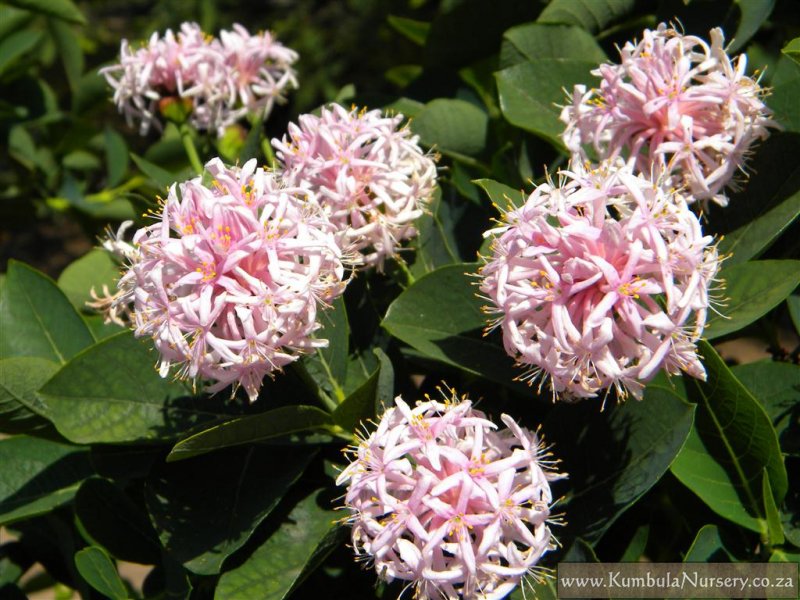
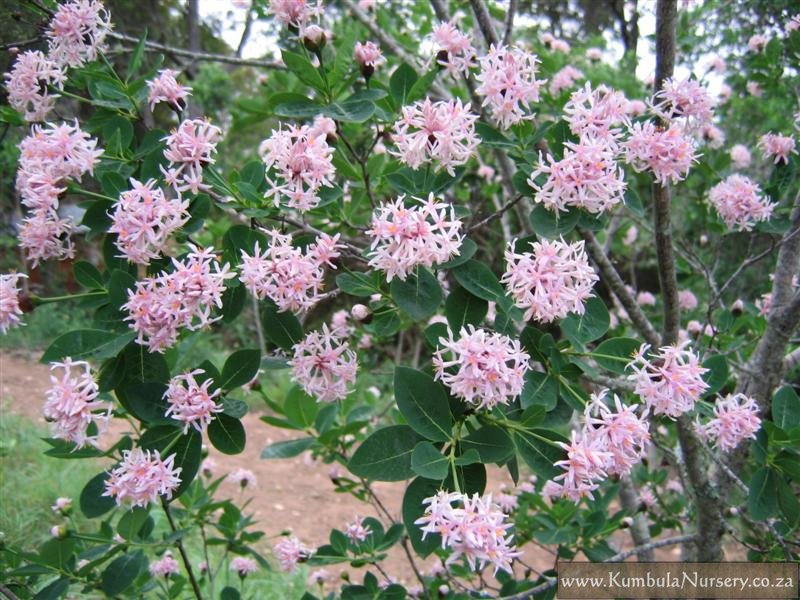
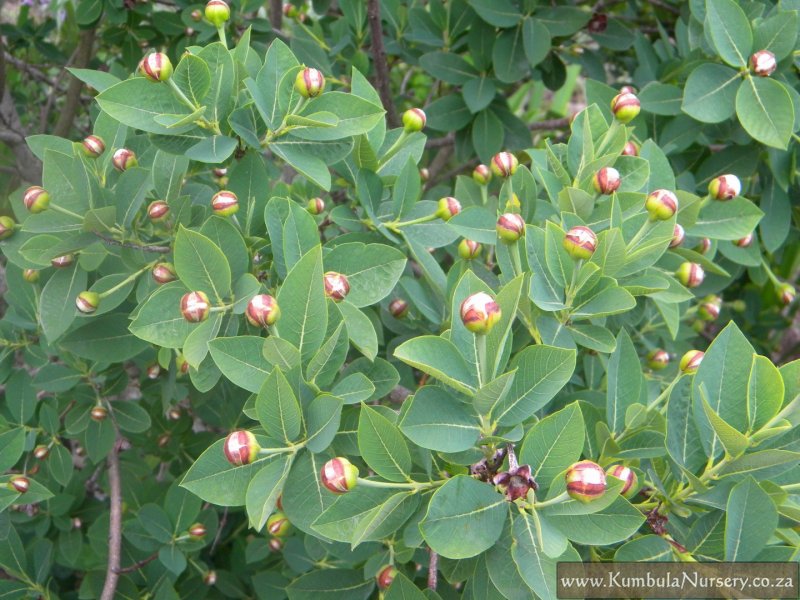
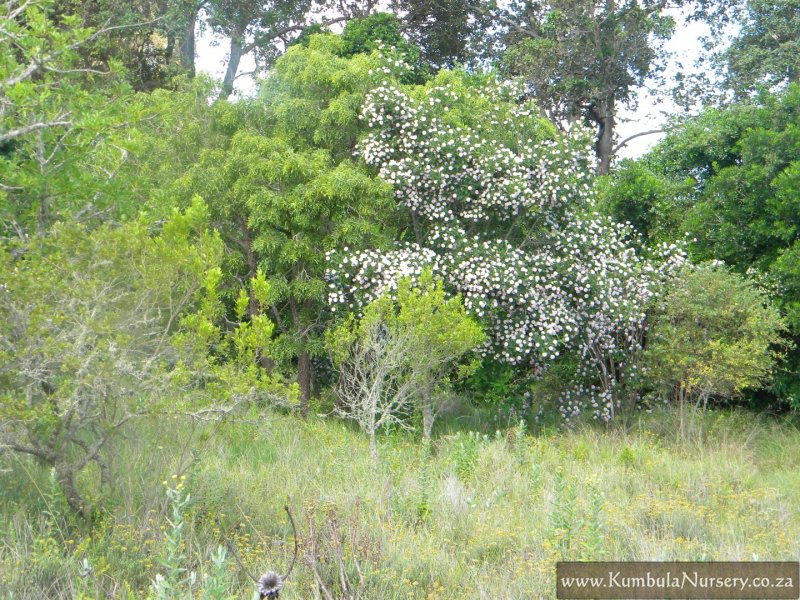
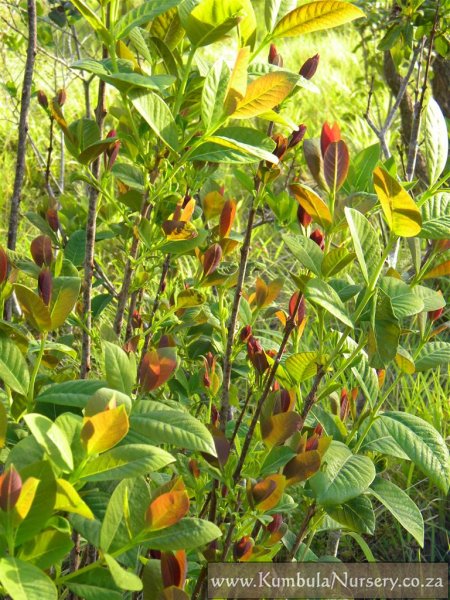
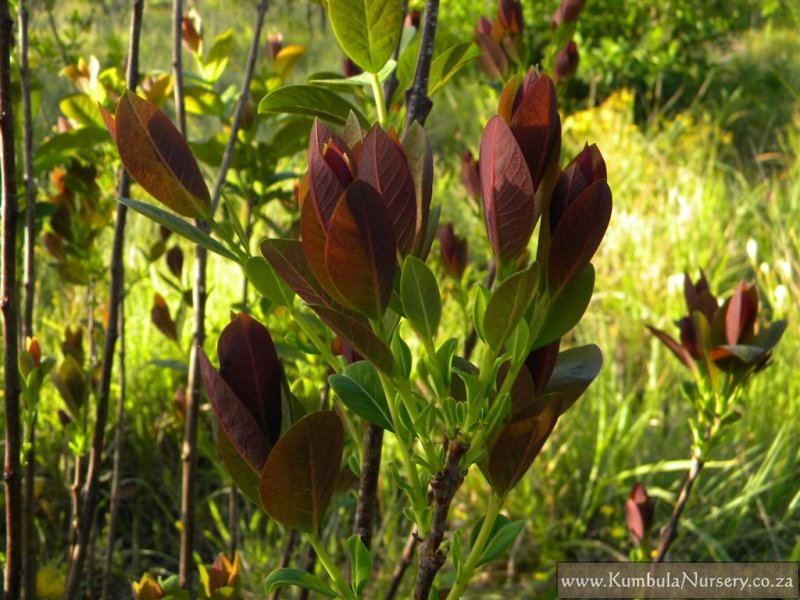
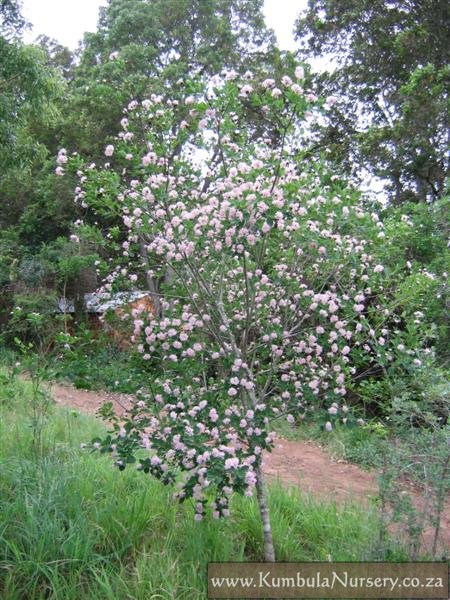
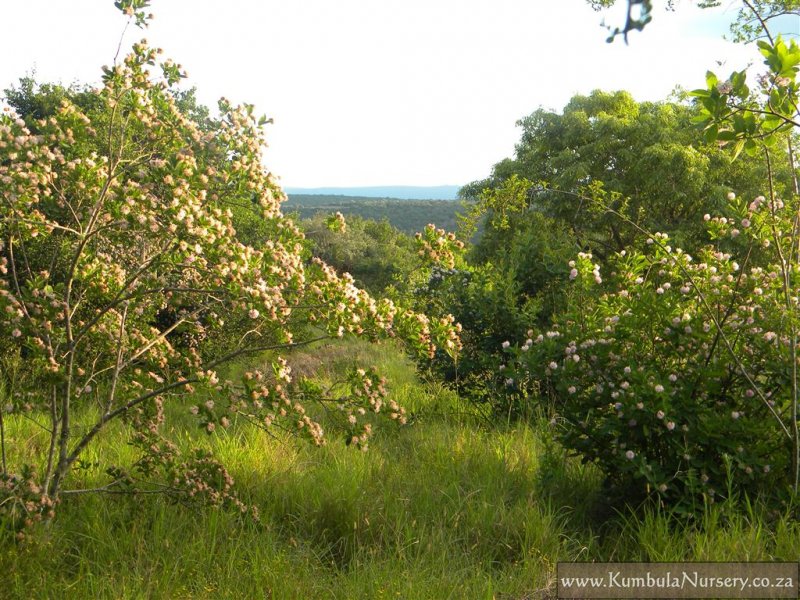
Dais cotonifolia has a rounded, leafy crown and usually flowers from its second year. In warm climates the trees lose their leaves briefly at the end of winter, while in very cold areas the trees are deciduous. They are quick growing and reach their full height within 4 to 5 years,
|
| Ad Break |
|
| Flowers |
| Description |
many small, tubular flowers in tight bunches
|
| Season |
- Summer Plants will seldom bloom for the entire season as given in the list, but should flower during a period within these parameters.
|
| Colour |
|
| Growth Rate |
- Very Fast Specifying growth rate can be very misleading as there is considerable variation of growth rate depending on type and species of plant, available water, supplementary feeding, mulching and general care, as well as the plants suitability and adaptability to the garden environment.
|
| Plant Uses |
- Accent or Focal Point A plant used to attract the attention because of its colour or form.
- Attracts bees, butterflies or other insects This plant attracts insects which can be food for birds or other creatures in your garden.
- Attracts Birds This plant will attract birds.
- Border A strip of ground, at the edge of a driveway or path in which ornamental plants or shrubs are planted.
- Boundary A plant useful for planting around the edges of the property to form a green or colourful backdrop, an impenetrable hedge, to hide walls or create privacy.
- Container Trees, shrubs and ornamental species that can adapt to growing in a restricted environment.
- Filler Either a fast growing tree or shrub used temporarily to fill in an area while the permanent plants grow to a desired size, or a plant used to fill gaps in borders or beds.
- Pioneer for new gardens A very fast growing plant, able to withstand hardship, that can be used to populate land that has recently been cleared of natural vegetation. These plants pave the way for slower-growing species by adding nutrients to the soil and creating leaf litter.
- Provides light / dappled shade A tree with an open to sparse canopy, through which varying degrees of sunlight can penetrate.
- Suitable for coastal gardens Plants adapted to dry, sandy soil, forceful wind, limited rainfall and intense sunlight.
- Suitable for smaller gardens Such plants do not have invasive root systems, remain small or controllable and can often be grown in containers.
- Wild Garden An indigenous garden planted for the benefit of wildlife and birds. Provides food, water, a variety of mini-biomes and no poisonous chemicals are used.
|
| Distribution and Habitat |
Eastern Cape, Free State, Gauteng, KwaZulu-Natal, Limpopo, and Mpumalanga, on forest margins, wooded hillsides and in stony valleys
|
| Planting Suggestions |
Water the young tree regularly during the summer months for about two years. Mulch around the base and drip area of the tree will conserve water, reduce weed growth, keep the roots cool and feed the soil. Prune young trees lightly after flowering if a bushier effect is required.
The old method of digging a deep hole and filling it with soil and compost has resulted in many trees failing to thrive, dying, rotting at the base or worse still, falling over in later years due to poor root development. Refer to the following sites for the best method of planting trees:
Treehelp.com: Planting a tree
International Society of Arboriculture: New Tree Planting
Tree People: Plant the right way
For those of you who have a clay problem try:
Rod's Garden: Planting in clay soil
|
| Medicinal Uses |
The bark is used as thread or cord and is reported to have the strongest fiber of any tree in KwaZulu-Natal.
|
| Ad Break |
|






Comments
pompon tree roots
My pompon tree is standing roughly 5 metres high and is about 1/2 metre from the neighbouring wall. It has already lifted the wall approx 100 mm, but my greatest concern is my neighbours swimming pool is roughly 5 metres from the tree ,will the roots damage the pool
Dais cotonifolia: problem roots
Hi George
The pompon tree is known to have a non-aggressive root system so it shouldn't interfere with your neighbour's pool. The most likely reason for it having lifted the wall is because it is planted so very close to the wall, where the roots are at their biggest diameter. I have removed a couple of these trees in the past and have found that the root system doesn't extend very much past the drip area of the tree. For peace of mind, however, I would approach my neighbour to request permission to dig a short, narrow trench about half way between the pool and the tree, to better assess any danger. If it appeared that any really robust roots were headed for the pool, I might cut them, but I think this would be entirely unnecessary. Any roots that do reach the pool are likely to be far too thin and weak to do any damage.
Hope this helps.
Lorraine
pompon tree root system
Hi Lorraine thank you very much for your reply very much appreciated, now feel much better
regards George
Dais cotonifolia
Hallo daar,
Ek het ‘n vraag oor die Pompom boom. Ek het een so 2 jaar terug een in my tuin geplant en die ou boompie doen glad nie goed nie.
Hy het nou wel al twee jare blare en blomme gehad, maar die boompie groei nie. En hierdie somer was daar selfs minder blare en blomme as verlede jaar.
Gee ek te veel water, is die dreinering nie goed genoeg nie, of is dit dalk die tipe grond waar in hy staan? Sal dit dalk beter wees as ek hom in ‘n groot pot oorplant?
Kan julle dalk raad gee oor watter tipe grond die boompie van hou en watse voeding en hoeveel ek moet gee?
Byvoorbaat dankie.
Groete
Dineke Vink
Pompomboom
Dag Dineke
Voor ek jou vrae kan beantwoord, sal jy asseblief vir my laat weet in watter area van Suid Afrika jy woon, die soort grond, bv. sand of klei, en waar die boompie staan - son, skadu ens. Dit sal my help om beter raad te gee.
Groete
Lorraine
Pompom boom
Hi Lorraine,
Jammer ek het nie al jou vrae beantwoord nie. Ek woon in Moreleta Park, Pretoria,die boompie staan in vol son. Ek is nie 'n expert op grond tipe nie. Ek vermoed die grond tipe is 'silt', want dis nie klei of sanderig nie. En ons het baie klip banke. Hoop dit help.
Groete
Dineke
Dag Dalene
Dag Dalene
Jammer dat ek so lank geneem het om terug te skryf. Ek het heelwat lank oor jou probleem gedink en dit het my uiteindelik geslaan. Ek dink jou probleem is hitte. In sy natuurlike habitat groei die boom op die grens van dik bos, tussen bome op die kant van koppies of in valleie. In hierdie plekke kry hulle heelwat beskerming van die ergste van die son se strale. In my wilde tuin groei al my boompies tussen of onder ander bome, sonder enige 'ekstra' water, in heelwat onvrugbare sand. Hulle het jarelank droogtes oorkom sonder skade.
Jou boompie soek skadu. Jy kan dit uithaal en oorplant in 'n plek waar dit halfdag skaduwee kry of dit in 'n pot plant. Enige dreineerde grond sal reg wees met 'n bietjie kompos en 'n goeie laag blare of gekapte bas op die grond om die boom, om dit koel te hou. Vra by jou kwekery vir organiese voeding hoog in stikstof - die instruksies sal op die pakkie wees.
Dit kan nogtans gebeur dat die boompie nie floureer nie want dit is permanent beskadig en die groei prosess is belemmer. My voorstel is dat dit jou sal baat om met 'n nuwe boompie te begin.
Hoop dit help.
Groete
Lorraine
Dais Cotinifolia
Hi Lorraine,
Baie dankie. Ek gaan jou raad volg.
Groete
Dineke
I just bought this tree from
I just bought this tree from a nursery and the lead stem has been trimmed. Is this normal? Should I exchange it for one that has not been trimmed? I have small garden but would like it to be more tree like then shrub like. Also how far from the boundary wall should I plant it?
Shaping a young Dais
Hi Minette
Usually the lead stem is cut or tipped to force the growth of side branches. I had a couple of Dais in bags that I did not tip and they grew taller and taller until they were so lanky that I could do nothing with them. To encourage the plant to grow as a tree, I would remove any shoots emerging from the base of the tree, as well as all the leaves and small branchlets from the lower third of the main stem. Once the side-branches have grown to about 20 cm long, I would cut these back by about a third, to encourage compact growth with plenty of branching. This can be done with the subsequent shoots as the young plant grows.
Dais cotonifolia has a non-aggressive root system, ideal for a small garden. You can plant it about a meter from the wall but if you want to ensure a rounded tree you would need to plant it 2 or more meters from the wall. If you are short of space I would choose the first option but there will be some flattening of the section against the wall.
I have found that Dais respond well to yearly trimming to keep them in shape.
Kind regards
Lorraine
Pom pom boom
Hi Lorraine. Ons bly in jeffreysbaai en wil dit vir n straat boom gebruik maar soos jy weet die wind is n groot vyand hier by ons en die boompies sal in vol son staan. Dink jy hul kan dit oorleef?
Groete
Dais cotonifolia
Dag Hettie
Die bome verkies om in bos en valleie te woon waar hulle beskerm is van wind en te veel sonskyn. Hulle sal miskien die son oorleef maar te same met die wind is dit heelwat onwaarskynlik dat hulle sal floreer. Die blare is dun, sonder vesels of hare wat hulle kan beskerm teen die uitdrogingde effek van die wind en die son.
Virgilia divaricata of Keurboom sal miskien 'n beter keuse wees: http://kumbulanursery.co.za/plants/virgilia-divaricata
Vriendelike groete
Lorraine
Plant near a pool area
Hi, I need to find out if I plant this near a pool how far away from the pool should it be planted. I live in gauteng and need to find out if it will be ok if i plant it in full sun? It's not normally windy in our area?
Dais near a pool
Hi Rudy
The root system is not a problem and you can plant the tree as close a two meters. Leaves and flower debris may be problematic for a short time each season so it would be wise to avoid having the tree hanging over the pool so as to minimise the problem.
Kind regards
Lorraine
Full sun
Hi lorraine I have read some of the other omments and I am worried about the sun since the place i wish to plant the tree is not overgrown and it has alot of open space. Also we have clay soil so I do not know if this will be a problem
Dais in the sun
Hi Rudy
Although this will sound contradictory to what I have previously suggested, Dais can be grow in full sun, but not in a harsh, burning hot environment.
As to the clay soil, I have no experience with this. My guess is that it would depend on the severity of the clay content. If the soil has very poor drainage you could have a problem. Even providing a large hole with lots of compost will not help much as the tree will become root bound within the hole as the roots will hesitate to venture out of the hole into a heavy, less nutritious environment.
A light clay should not be a major problem.
Kind regards
Lorraine
Dead Pompom Tree wood
Can I use the wood for braaiing - it has a distinctive smell.
Use of wood on the braai
Hi Trisha
I have not yet come across any information or documentation with regard to the toxicity of using the wood for a braai, but the distinctive smell would certainly be an indicator that the smoke may taint the food with a strange flavour.
Personally I would not chance it.
Kind regards
Lorraine
Bark damage
Hi Lorraine,
I have noticed some damage to the bark of two of my Pompon trees. It looks like either a bird or insect may be stripping the bark from the tree.
Have you come across this before, and do you have suggestions fot me?
Thanks
Bark damage on Dais
Hi Willie
My sincere apologies for not having replied to you query for such a long time.
I am sorry but I am a complete loss as to what has happened to your trees and I have not come across it before. With the amount of bark removed I wonder if the trees will be able to survive.
Do let me know if the trees have recovered or not. I would also appreciate some closer photos - it is very difficult to see the damage clearly.
Hopefully another reader may be able to supply more information.
Kind regards
Lorraine
Pruning Dais Cotinifolia
Hi Lorraine
I bought and planted a fairly tall dais a year ago (500L bag) it is doing well and is about 3m tall but is very lanky (skraal) and want to prune it into a more rounded shape. I am in Hillcest KZN. Is October the right time to do this? Any suggestions regarding such pruning?
Peter
Pruning Dais Cotinifolia
Hi Peter
Apologies for not having replied to your question sooner.
I prune my Dais during late winter around August to September, when the tree is dormant and before (or when) the new shoots begin to show. Dais take very well to pruning and it is as well to prune quite aggressively when the plant is young so as to begin with a nicely shaped plant. I usually take at least a third of the long shoots off - you could take off up to a half if you missed this year's pruning.
Hope this helps.
Kind regards
Lorraine
Discuss this plant
Share knowledge, ask a question or give an experience.