

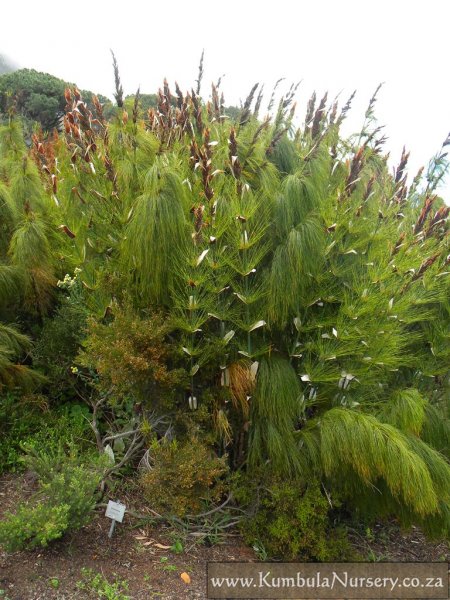
Elegia capensis
| Botanical Name | Elegia capensis |
|||||||||||
| Family | Restionaceae - The Cape reed family. |
|||||||||||
| Pronunciation | el-EE-jee-a ka-PEN-sis |
|||||||||||
| Common Name(s) |
English: Horsetail restio
Afrikaans: Besemriet; Fonteinriet; Katstert
|
|||||||||||
| Plant Group |
|
|||||||||||
| Plant Size |
|
|||||||||||
| Position |
|
|||||||||||
| General Information |
|
|||||||||||
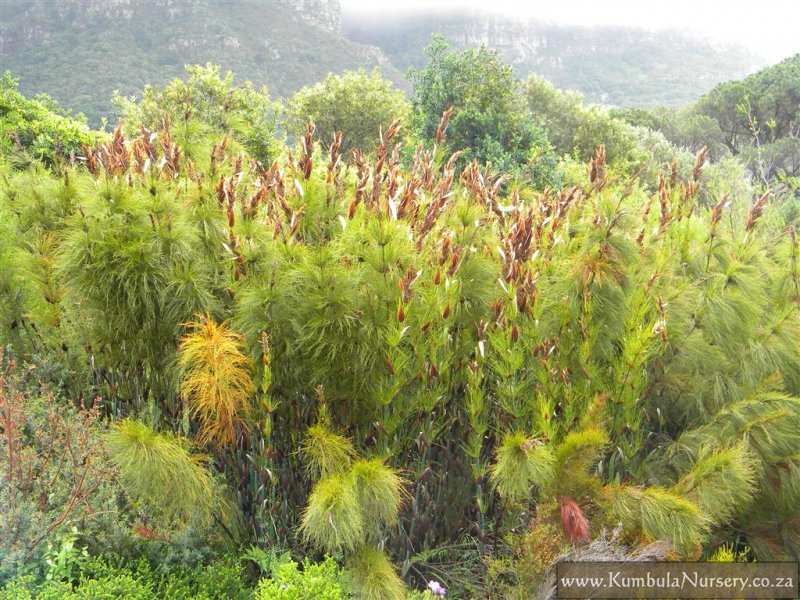
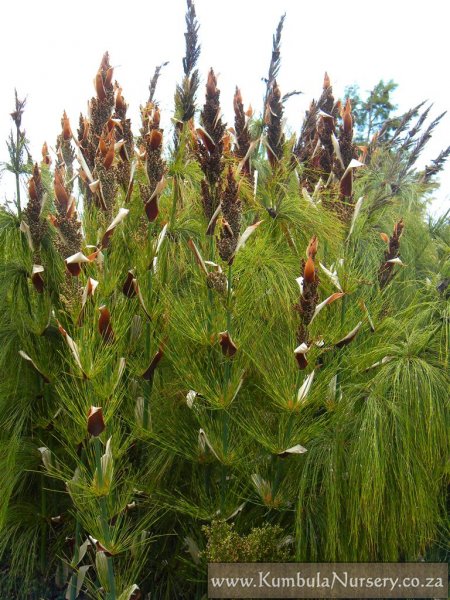
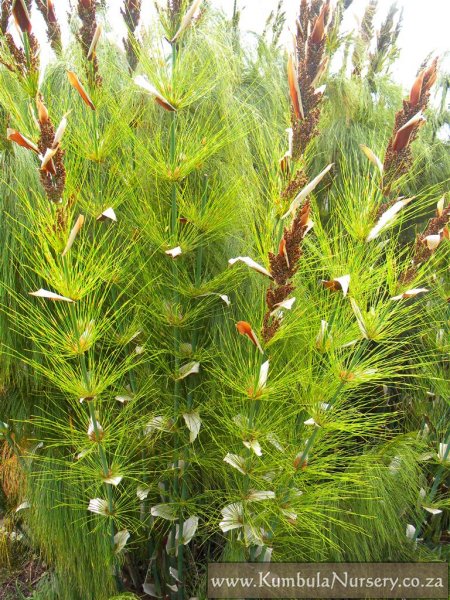
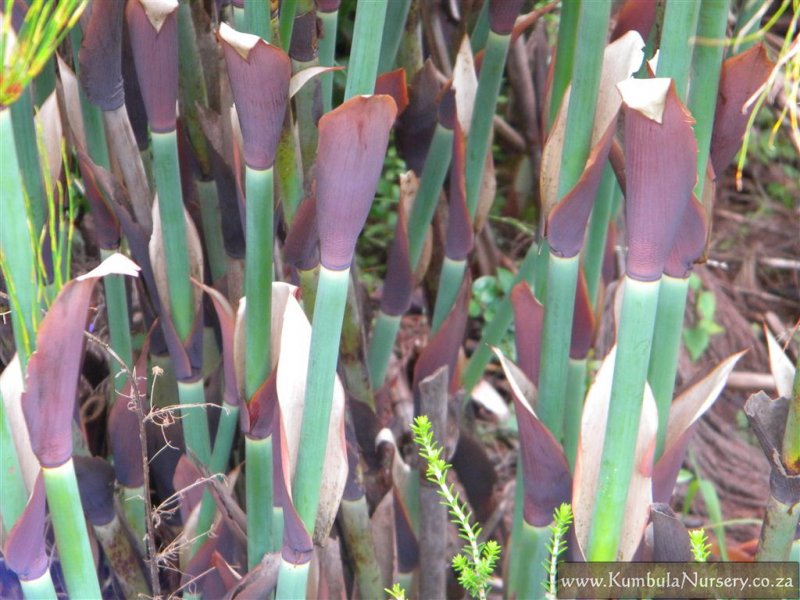
| Specific Information | With tall bamboo-like stems and soft, feathery, needle-like leaves, the horsetail restio will enhance swimming pool areas, larger water features and areas around dams, streams and seepage sites. This elegant plant, forming a thick forest of stems, needs to be kept in check if space is an issue. Growth is somewhat slow for the first three years (1m in the first year), after which it quickly grows to full height and the rhizomes start to spread rapidly, easily reaching a diameter of three to five meters. Elegia capensis needs a lot of water to maintain its lush green foliage. In drier conditions the plants will be smaller, fairly sparse and yellowish in colour. Tolerant of frequent and strong winds. It needs protection from frost and thrives in the conditions of a Mediterranean climate. Given similar conditions of soil and water, this plant should flourish in frost free gardens |
|||||||||||
| Ad Break | ||||||||||||
| Flowers | ||||||||||||
| Description | flowers are very small but the decorative heads on both male and female plants are about 350 mm long, changing from cream to golden then brown, remaining on the plant for up to six months |
|||||||||||
| Season |
|
|||||||||||
| Colour |
|
|||||||||||
| Growth Rate |
|
|||||||||||
| Plant Uses |
|
|||||||||||
| Distribution and Habitat | from Clanwilliam in the Western Cape Province to Port Elizabeth in the Eastern Cape Province, from near sea level to an altitude of 1 600m, in moderately poor, sandy soils, always near watercourses, in seepages on mountain slopes or in areas where groundwater is present |
|||||||||||
| Planting Suggestions | These plants need plenty of space and water. Elegia capensis will sprout from large chunks of the rhizomes separated from established plants (the roots are sensitive so replant immediately). This should be done at the beginning of the rainy season. Sandy, well composted soil will suffice, but plenty of water must be readily available. The plant will not thrive in clay soils. Stems older than about three years should be cut off to allow the yearly new growth to flourish. If necessary, feed the plants during the growing season with a slow-release or standard organic fertilizer or sprinkle a little ammonium sulphate around the area. If the plants appear yellowish use a high nitrogen fertilizer. Elegia capensis does not send out suckers as does bamboo, but you definitely need to allow enough space for its mature size of 3 to 5 m in diameter. If your space is limited it may be useful to sink a large, bottomless container (such as a large drum) in the ground, in which to plant the rhizomes. I imagine that the container would have to be removed and replaced every few years to prevent overcrowding. |
|||||||||||
| Medicinal Uses | Used as a broom by binding the sturdy stems with their tufts of foliage to a straight branch or broomstick. |
|||||||||||
| Ad Break | ||||||||||||




Comments
elegia in water
will elegia capensis grow in shallow water up to 30 cm deep, providing there is a good sandy substrate for the roots
Elegia Capesis
I have battled for years to find this reed in Gauteng and had given up on findind it as much as I loved it. First saw it at Kirstenbosch. Today I got the surprise of my life as a friend from the Cape turned up with one in a small pot. I was over the moon when I saw it. I now need to plant it and as we live in Pretoria I need advice on the soil mixture. I was think of getting a wide mouth shallow pot to start with as I intend taking this plant with me if we relocate.
So please advise me on soli, compost, food, fertilizer and whatever I have to do to keep ths plant Happy.
Growing Elegia capensis
Hi Kevin
If the information provided under the heading 'Planting Suggestions' does not supply sufficient information for your needs, I suggest you contact Kirstenbosch Botanical Gardens as they will have more hands on experience in this.
Kind regards
Lorraine
Elegia capensis
Thanks very much for the response and I have decided to try it in a large clay pot so I can keep it as moist as possible.
Regards
Kevin Brassel
Sounds good
Hi Kevin
I prefer clay pots to plastic but do be aware that they are notorious for drying out quickly. Keep a constant eye on it.
Regards
Lorraine
Discuss this plant
Share knowledge, ask a question or give an experience.