| Botanical Name |
|
| Family |
Asteraceae - The daisy family. |
| Pronunciation |
eh-ree-oh-SEF-ha-lus af-ri-KAHN-us |
| Common Name(s) |
Afrikaans: Wilderoosmaryn; Kapokbos
|
| Plant Group |
- Ground Cover A plant with a low-growing, spreading habit, grown specifically to cover the ground.
- Shrub A woody plant of relatively low height, having several stems arising from the base and lacking a single trunk; a bush.
|
| Plant Size |
- Small to Medium
| Tree | 8m to 15m |
| Shrub | 75cm to 1m |
| Perennial/ground cover | 20cm to 40cm |
| Bulb | 30cm to 40cm |
| Succulent | 20cm to 40cm |
|
| Position |
- Sun The area is in full sun for all or most of the day, all year round.
|
| General Information |
- Attractive fruits, berries or seeds Brightly coloured fruits or berries increase and extend the visual impact of the plant and are especially attractive to birds and other small wildlife.
- Drought Tolerance: High The plant is well adapted to arid conditions; it can survive long periods of drought and high temperatures without extra water.
- Evergreen Plants that have leaves all year round.
- Fragrant / Aromatic These plants posses a strong, usually pleasant odour.
- Frost: Hardy The plant can withstand freezing temperatures or frost without artificial protection.
- Salt spray tolerant A plant with specific adaptations enabling it to grow in a saline environment.
- Sand tolerant Plants adapted to survive in nutrient poor, very sandy soils.
- Water Wise Plant species originating from low rainfall regions that require less water to survive and thrive than other plant species.
- Wind Tolerant Plants able to withstand the effect of strong winds.
|
| Specific Information |
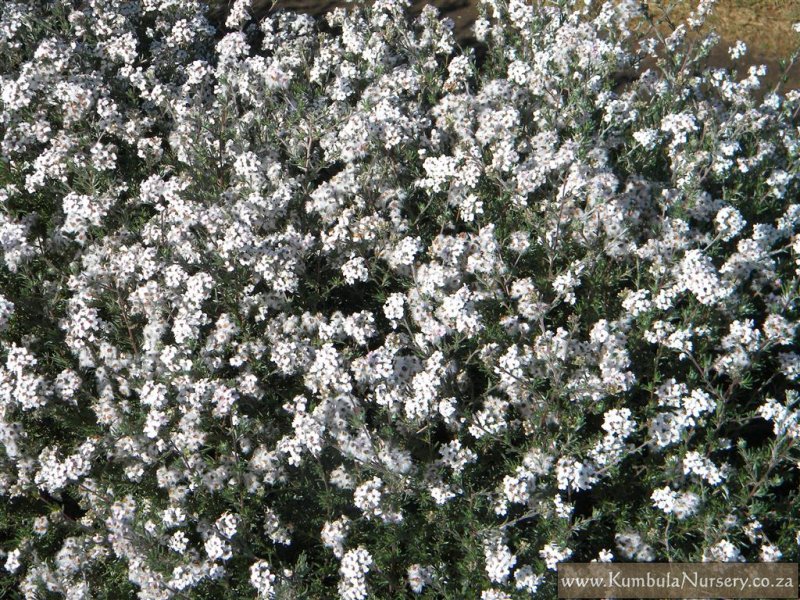
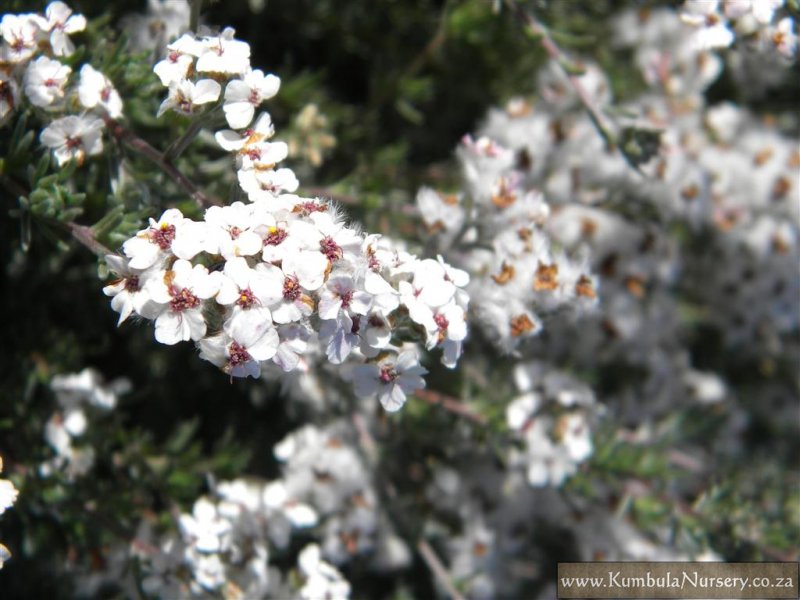
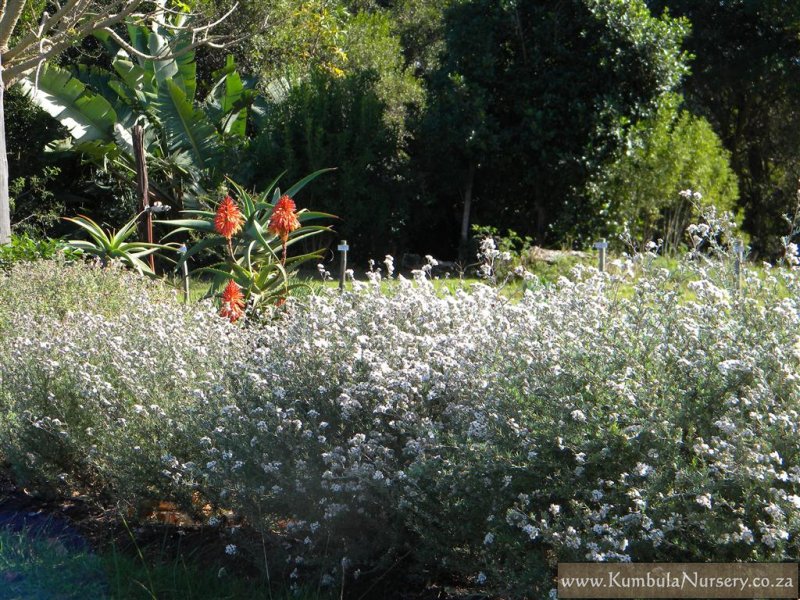
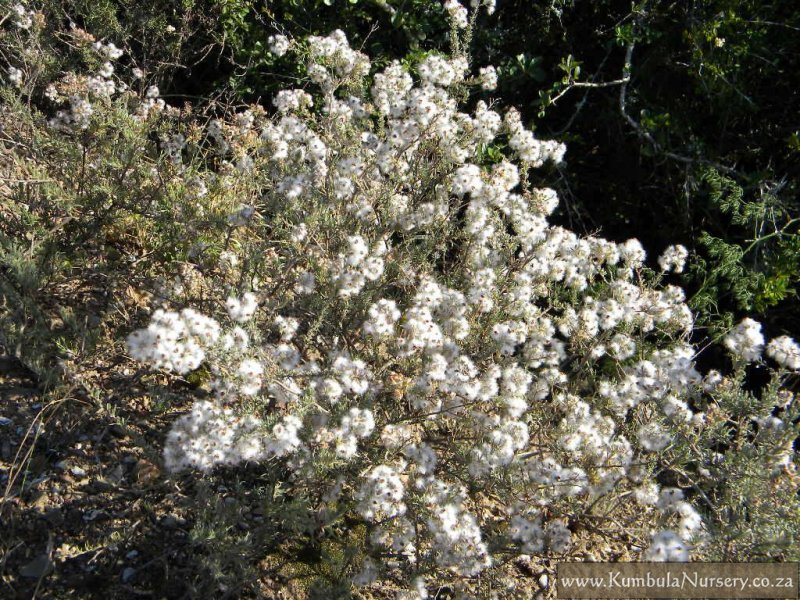
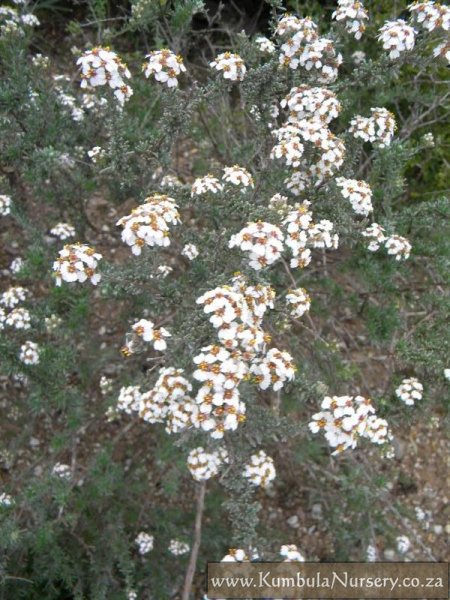
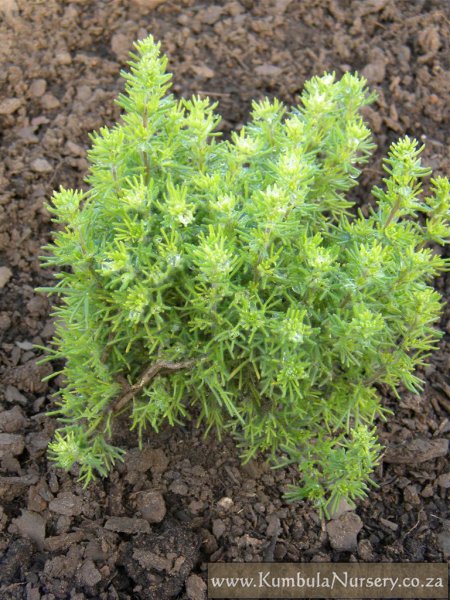
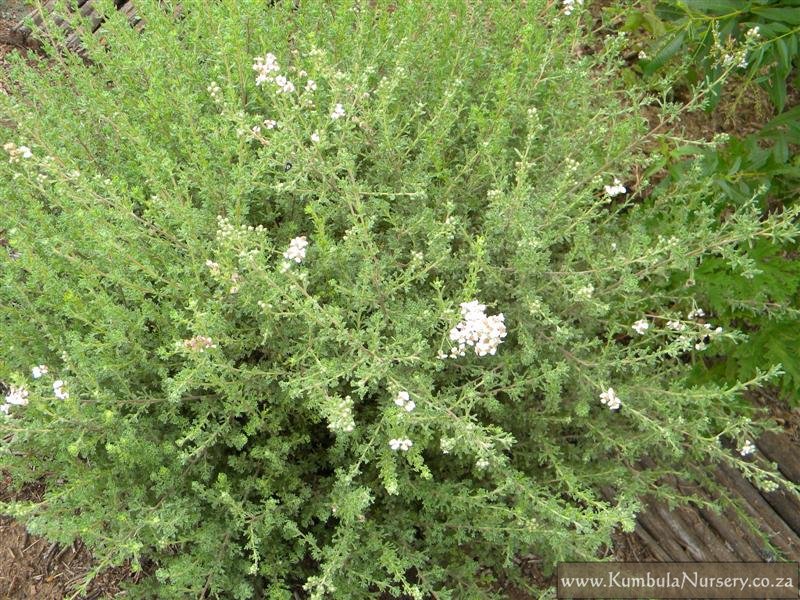
Eriocephalus africanus is an absolute must for any garden, water wise or not. The fine, grey, aromatic foliage, the snow white flowers and the fluffy cotton wool seeds ensure that it has year long appeal, apart from which is can withstand the most adverse conditions of weather, soil and habitat. Wild rosemary can be pruned to shape, makes a neat border hedge and can be used to soften rock and succulent gardens.The fluffy, white seeds that develop after flowering cover the bush, giving rise to the Afrikaans common name Kapokbos, meaning 'snow bush'. The foliage is variable, being more succulent in the face of sea breezes and finer in drier inland habitats.
|
| Ad Break |
|
| Flowers |
| Description |
Profusion of tiny, white blossoms.
|
| Season |
- Winter Plants will seldom bloom for the entire season as given in the list, but should flower during a period within these parameters.
|
| Colour |
|
| Growth Rate |
|
| Plant Uses |
- Attracts bees, butterflies or other insects This plant attracts insects which can be food for birds or other creatures in your garden.
- Border A strip of ground, at the edge of a driveway or path in which ornamental plants or shrubs are planted.
- Edging A low growing plant that provides softness or definition to the edges of a bed or walkway.
- Filler Either a fast growing tree or shrub used temporarily to fill in an area while the permanent plants grow to a desired size, or a plant used to fill gaps in borders or beds.
- Ground Cover Low-lying plants that spread fast, require minimal maintenance, and cover large expanses or bare areas between bulbs or shrubs. They provide protection from erosion and drought and improve the visual appearance of the garden.
- Hedge Suitable trees or shrubs planted relatively close together so that the branches intertwine to create a barrier. This can be formal – the plants are regularly trimmed to produce a neat shape, or informal – the plants are left to themselves to create a natural hedgerow.
- Pioneer for new gardens A very fast growing plant, able to withstand hardship, that can be used to populate land that has recently been cleared of natural vegetation. These plants pave the way for slower-growing species by adding nutrients to the soil and creating leaf litter.
- Rock Garden An area constructed of larger rocks, arranged naturally, to emphasise the use of stones as a main element. Generally plants used do not need a lot of care.
- Stabilize Banks Plant is used to prevent soil erosion because their roots will form a mat that stabilizes the soil and keeps it from washing away in heavy rains.
- Suitable for coastal gardens Plants adapted to dry, sandy soil, forceful wind, limited rainfall and intense sunlight.
- Suitable for seaside gardens Plants that will survive the hostile environment of harsh salty winds, dry sandy soil, irregular rainfall and heat found in seaside gardens.
- Suitable for smaller gardens Such plants do not have invasive root systems, remain small or controllable and can often be grown in containers.
- Wild Garden An indigenous garden planted for the benefit of wildlife and birds. Provides food, water, a variety of mini-biomes and no poisonous chemicals are used.
|
| Distribution and Habitat |
in the Western Cape, Eastern Cape and Namaqualand, on clay and granite slopes and coastal sand
|
| Planting Suggestions |
Wild Rosemary will grow in most garden soils. Add some compost when planting and mulch to retain moisture. Water when the soil is almost dry under the mulch, until the plant has settled, then reduce the amount of extra watering. Wild rosemary will need very little care after this. Prune lightly after the seeds have disappeared to prevent lanky growth. It can also be shaped into a hedge.
|
| Medicinal Uses |
Wild rosemary has traditionally been used as a medicine for coughs and colds, flatulence and colic, as a diuretic and a diaphoretic (to increase sweating). A tea is made with 1 cup of boiling water and a sprig of wild rosemary. It can also be used for cooking, as a skin and hair conditioner and in pot-pourris.
|
| Ad Break |
|






Comments
Eriocephalus Africanus
Is this plant deer resistant? I have lots of deer that visit my California garden, and they don't touch the rosemary. I wonder if they will eat this plant?
Thank you.
Deer resistant?
Hi Susan
Unfortunately I am unable to give you a direct answer. Here in South Africa we do not have deer, so my knowledge of them is almost non-existent. I get the impression though, that they have a distinct appreciation of all things cultivated, with garden plants at the top of the list.
Here are some points to mull over:
The scent and flavour of Wild Rosemary is very mild compared to that of culinary Rosemary.
While culinary Rosemary has tough, spiky leaves, the leaves of Wild Rosemary are softly furry - much juicier.
In arid parts of South Africa, both Springbuck and sheep graze on a closely related species of Wild Rosemary (Eriocaphelus ericoides).
I suspect that Wild Rosemary would be at risk, but I guess the only way you can really find out is to experiment.
Kind regards
Lorraine
Moles/Gophers
Do you have any experience with the above critters with the wild rosemary. Are gophers a problem with the roots?
Moles and Gophers
Hi Beverly
I guess you are from the US? We don't have true Moles or Gophers in South Africa. I know nothing about the eating habits of Gophers but true Moles are insectiverous and do not eat or chew on any form of plant or vegetable matter.
You may be interested in the following article: http://kumbulanursery.co.za/blog/the-truth-about-moles
Kind regards
Lorraine
Discuss this plant
Share knowledge, ask a question or give an experience.