

Ficus sur
| Botanical Name | Ficus sur |
|||||||||||
| Family | Moraceae - The fig and mulberry family. |
|||||||||||
| Pronunciation | FY-kus s-UR |
|||||||||||
| Common Name(s) |
English: Broom cluster fig; Bush Fig; Cape Wild Fig
Afrikaans: besem-trosvy; Bosvy; Wildevy
IsiXhosa: Umkhiwane
Umkhiwane; Ingobozweni
Sesotho sa Leboa: Mogo-tshetlo; Mphai
Sesotho: Mphayi
Setswana: Nkuwa
Tshivenda: Muhuyu-ngala
IsiNdebele: Ikuwu; Likwani
|
|||||||||||
| Plant Group |
|
|||||||||||
| Plant Size |
|
|||||||||||
| Position |
|
|||||||||||
| General Information |
|
|||||||||||
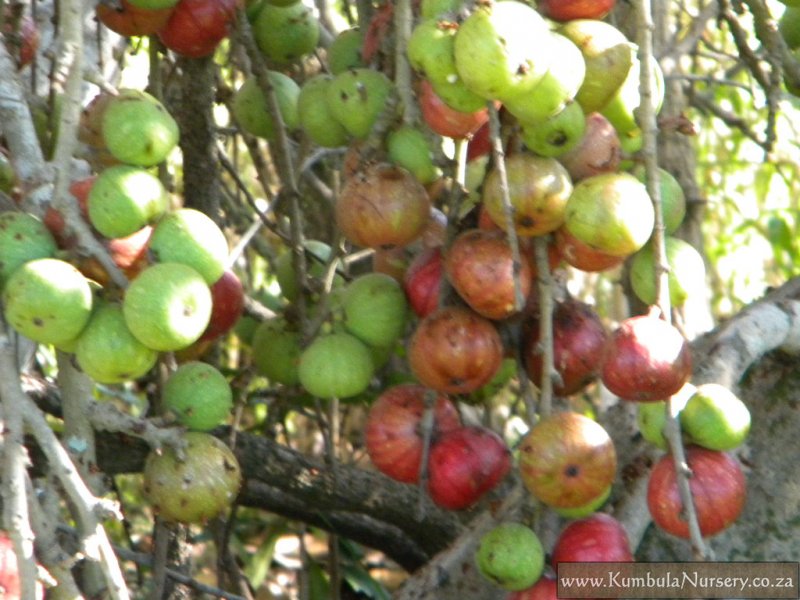
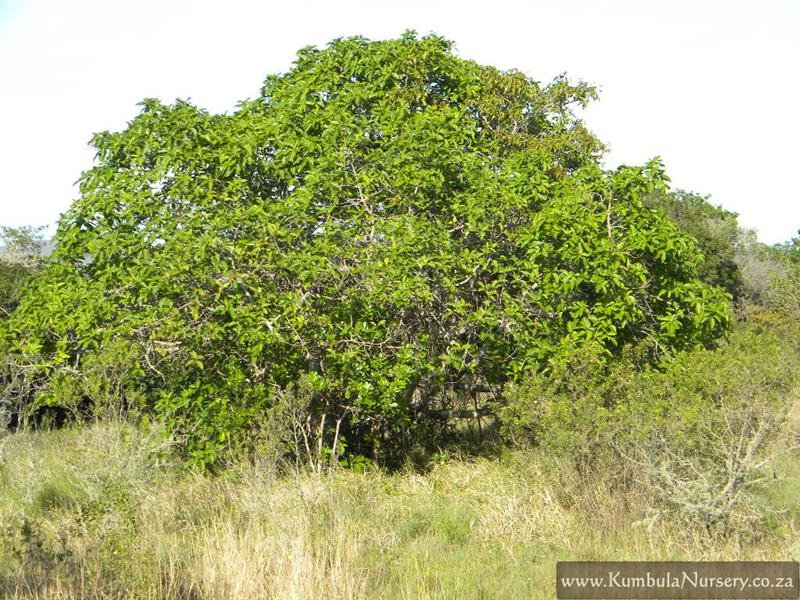
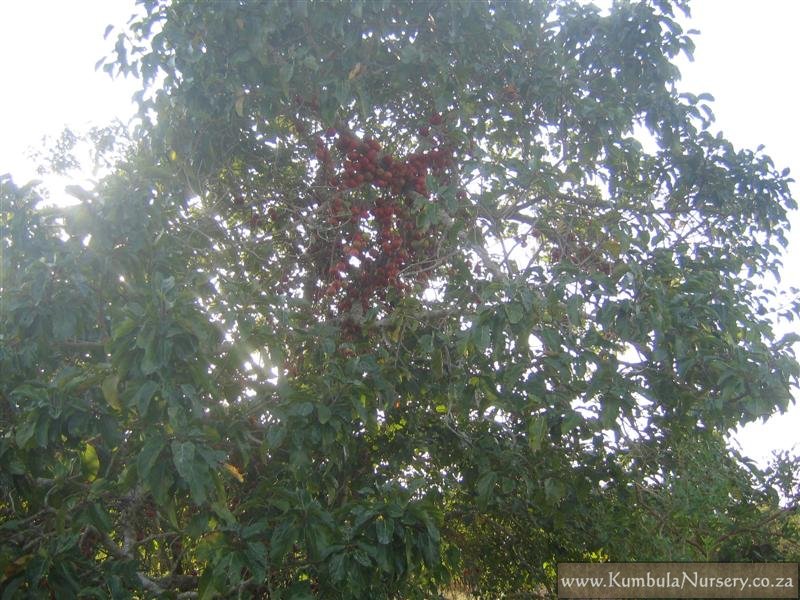
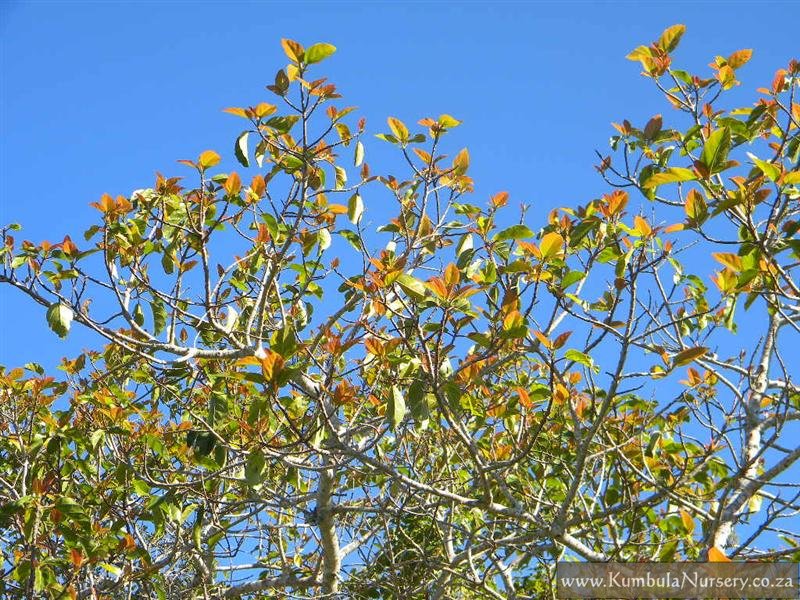
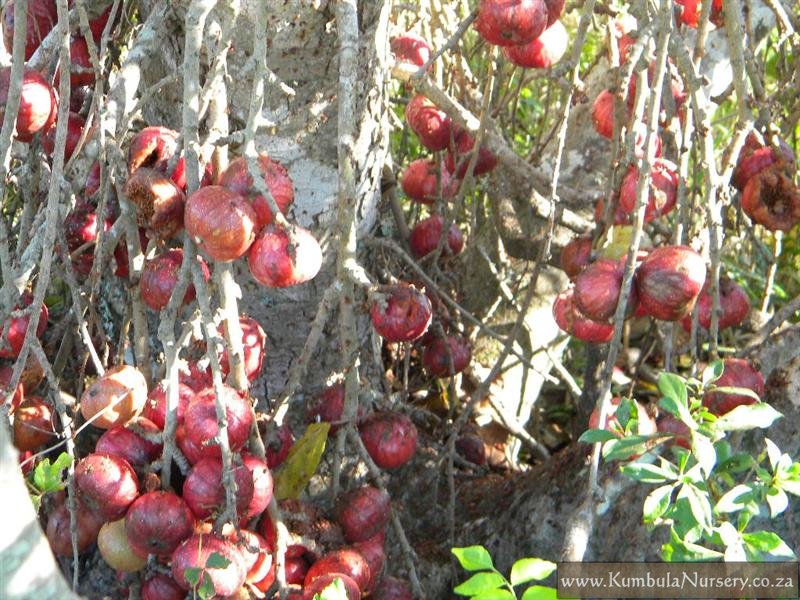
| Specific Information | Ficus sur has a dense, rounded crown with large, shiny leaves and attractive purplish figs carried in large clusters on the lower parts of the trunk. New growth has a striking pinky colour. Attracts a wide variety of fruit-eating birds, some of them rare visitors that are only seen when the figs are ripe. A white milky fluid or latex exudes from any part of the plant which is damaged. I have never really noticed that I have never seen a flower on a fig tree. Here's why: Fascinating facts about figs: The fig we eat is not a fruit but an inside-out flower stalk containing many flowers. This 'container' has a small opening at one end. Through this opening a small female wasp enters and lays her eggs in special infertile flowers, while unintentionally pollinating the fertile flowers and gathering pollen in special sacs. She then leaves through the opening again and carries the pollen to another fig. To add to this intricacy, each species of fig has its own specific species of wasp that pollinates it. |
|||||||||||
| Ad Break | ||||||||||||
| Flowers | ||||||||||||
| Description | See comment in Specific Information above. |
|||||||||||
| Season |
|
|||||||||||
| Colour | ||||||||||||
| Growth Rate |
|
|||||||||||
| Plant Uses |
|
|||||||||||
| Distribution and Habitat | from the Western Cape, to the Eastern Cape, KwaZulu-Natal, Mpumalanga, and Limpopo, and into North Africa, alongside rivers and waterways, riverine forest and drier woodlands |
|||||||||||
| Planting Suggestions | Due to a large and invasive root system Ficus sur is best suited to farms, large plots, golf courses and estates, well away from sewage pipes, permanent structures, paving and pools. Ideal for a wildlife garden. Ensure that sufficient space is available for this tree to spread. The old method of digging a deep hole and filling it with soil and compost has resulted in many trees failing to thrive, dying, rotting at the base or worse still, falling over in later years due to poor root development. Refer to the following sites for the best method of planting trees: International Society of Arboriculture: New Tree Planting Tree People: Plant the right way For those of you who have a clay problem try: |
|||||||||||
| Medicinal Uses | The milky latex found in the stems is used to treat lung problems and is administered to cows to increase milk production. The inner bark is used to make rope. Ficus sur is used in many rituals as it is believed by local people to have magical properties. The fruit is edible and is eaten when it turns pinkish and soft. Jam and preserves can also be made from the fruit. |
|||||||||||
| Ad Break | ||||||||||||




Comments
Ficus sur
What is the easiest way to propagate Ficus sur?
Propagation of Ficus sur
Hi Magret
I have no experience from which to draw, so I'll send you to the experts.
Go to: http://www.plantzafrica.com/plantefg/ficussur.htm
Towards the bottom of the page you will find propagation information for this tree.
Kind regards
Lorraine
Discuss this plant
Share knowledge, ask a question or give an experience.