
Millettia grandis


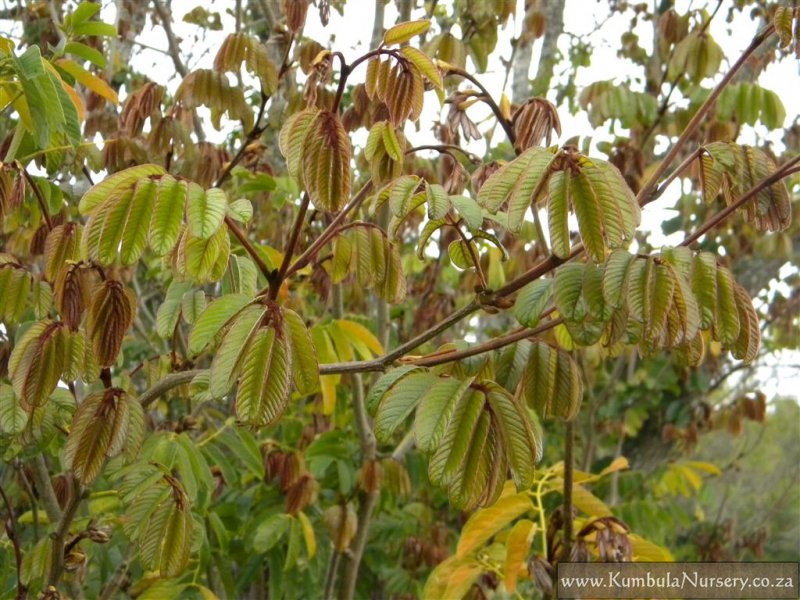
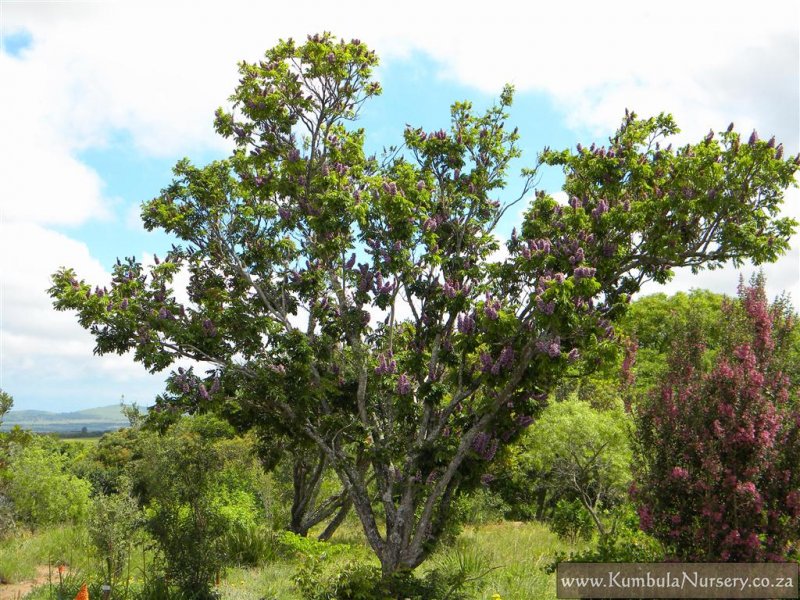
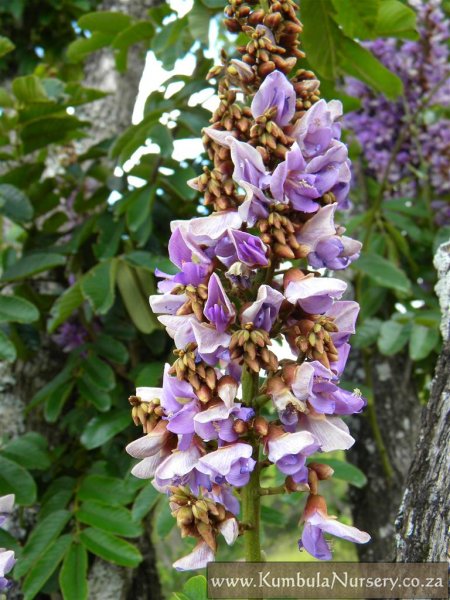
| Botanical Name | Millettia grandis |
|||||||||||
| Family | Fabaceae - The legume and pod-bearing family. (Pea & Bean Family) |
|||||||||||
| Pronunciation | mil-LET-ee-uh GRAN-dees |
|||||||||||
| Common Name(s) |
English: Umzimbeet
Umsambeet; Omsambeet
IsiXhosa: umKunye; Umsimbithi
IsiZulu: Umsimbithi; Umsimbithwa
|
|||||||||||
| Plant Group |
|
|||||||||||
| Plant Size |
|
|||||||||||
| Position |
|
|||||||||||
| General Information |
|
|||||||||||
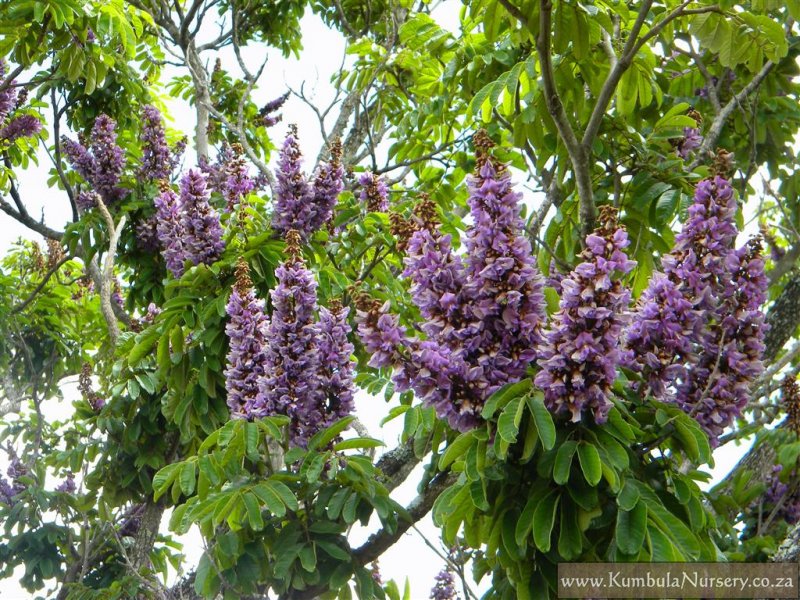
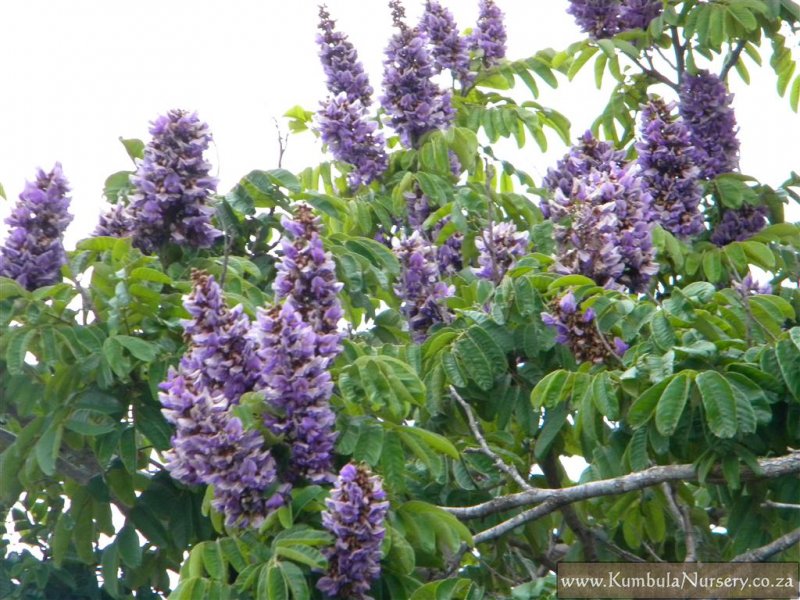
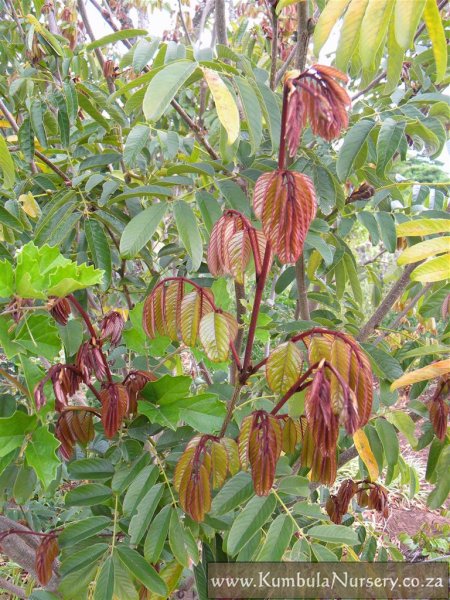
| Specific Information | Millettia grandis makes a decorative shade tree with glossy dark green leaves, grey bark, copper coloured young leaves and buds, purple flowers and velvety golden pods. In a moisture rich habitat it is a most handsome specimen. |
|||||||||||
| Ad Break | ||||||||||||
| Flowers | ||||||||||||
| Description | large pea-flower, on spikes up to 25 cm in length |
|||||||||||
| Season |
|
|||||||||||
| Colour |
|
|||||||||||
| Growth Rate |
|
|||||||||||
| Plant Uses |
|
|||||||||||
| Distribution and Habitat | from north of East London in the northern Eastern Cape Province into KwaZulu-Natal, along the coast, especially in the Pondoland area |
|||||||||||
| Planting Suggestions | Mulch well and water regularly, especially during the first year or two for optimum growth of up to 1 meter per year. Millettia grandis comes from a sub-tropical habitat and if grown in drier areas it will need ample water for it to display at its best. The old method of digging a deep hole and filling it with soil and compost has resulted in many trees failing to thrive, dying, rotting at the base or worse still, falling over in later years due to poor root development. Refer to the following sites for the best method of planting trees: International Society of Arboriculture: New Tree Planting Tree People: Plant the right way For those of you who have a clay problem try: |
|||||||||||
| Medicinal Uses | The ground seeds are soaked in milk as a remedy for roundworm, but care must be taken as seeds are poisonous in larger quantities.. Powdered root is prepared in various ways as a tranquiliser to dispel worries and to induce sleep. |
|||||||||||
| Ad Break | ||||||||||||




Comments
Milletia grandis
Hi there - could you please tell me if there is any reason why plants under a Milletia grandis never thrive. I know the roots are utilised as fish poison and wonder if they actually contaminate the soil. I am re-doing my garden and need to make an informed decision as to what to plant in this area. I am in Durban - Thanks Penny
Milletia grandis
Hi Penny
I have noticed that my specimen has roots quite close to the surface and this leads me to believe that they gobble the water and nutrients, leaving very little for the plants that try to establish themselves beneath it. I did try plants like plectranthus and variegated hen-and-chickens but they did not thrive, also being greedy feeders and needing a lot of water.
Here is a list of plants that have established themselves and are growing well under and around my Umzimbeet: Chlorophytum comosum (non-hybrid green variety), Barleria obtusa, Othonna capensis, Senecio barbetonicus, Dietes grandiflora, Hibiscus calyphyllus, Felicia and Bauhinia galpinii. This is a dry, water wise garden that relies on rainfall and gets no extra feeding.
My advice is to avoid 'soft' ground covers and shrubs and rather choose non-hybrid plants that do not need much water or rich soil. A thick layer of mulch will go a long way to harbour moisture while it also feeds the soil.
Hope this helps.
Kind regards
Lorraine
Umzimbeet honey
You say that bees like the Umzimbeet flowers. My trees have just flowered and the bees descended on the 3 trees from the time the buds started showing. Of course the local birds had a good feast. I was wondering what sort of honey do the bees make from these flowers ie runny or dark or thick. Also is the honey edible if the roots of the tree are poisonous?
Umzimbeet honey
Hi Janice
I am afraid I have no idea what sort of honey would result from the Umzibeet and I can only assume that it is highly unlikely that the poisonous roots would have any effect on the honey whatsoever.
Kind regards
Lorraine
request permission for photo
Would you give permission to reprint an image of the inflorescence of Millettia grandis in our magazine? It is circulated in less than 1000 copies as a benefit to paid members of the International Wood Collectors Society, a nonprofit organization.
Best regards, Mihaly Czako
Millettia Gradis root system
I'm looking for a medium sized tree to plant for shade, but it will be about 1 - 2m away from the tar driveway. Would a millettia Grandis be suitable or does it have an invasive root system. My soil is not very deep & is over shale. Can you suggest any other suitable indigenous trees.
Many thanks
Millettia Grandis on shale
Hi Norma
Root system: see above under heading 'General Information'.
Suitability: The Uzimbeet is primarily native to KwaZulu-Natal (see above text) where soils are deep and fertile and rain is plentiful. I have serious doubts that it will thrive in shallow, shale conditions where drainage is fast and the soil usually impoverished.
Suggestions: I am unable to answer this without knowing where you are - please let me know.
Kind regards
Lorraine
Meletia grandis
Please let me know what is the Ph requirements for this plant?
Thank you.
Ph requirements
Hi Adriaan
Apologies for not replying to your query sooner.
I have no idea what the optimum Ph for this tree would be. Mine grows in slightly alkaline soil but I am sure that, like most plants, it will thrive in neutral or slightly off to either side.
Perhaps another reader can be more specific.
Kind regards
Lorraine
Discuss this plant
Share knowledge, ask a question or give an experience.