

Kigelia africana

| Botanical Name | Kigelia africana |
|||||||||||
| Family | Bignoniaceae - The jacaranda family. |
|||||||||||
| Pronunciation | ky-GEL-ee-uh af-ri-KAHN-uh |
|||||||||||
| Common Name(s) |
English: sausage tree
Afrikaans: Worsboom
IsiZulu: umVunguta; umFongothi
Sesotho sa Leboa: Modukguhlu
Tshivenda: Muvevha
|
|||||||||||
| Plant Group |
|
|||||||||||
| Plant Size |
|
|||||||||||
| Position |
|
|||||||||||
| General Information |
|
|||||||||||
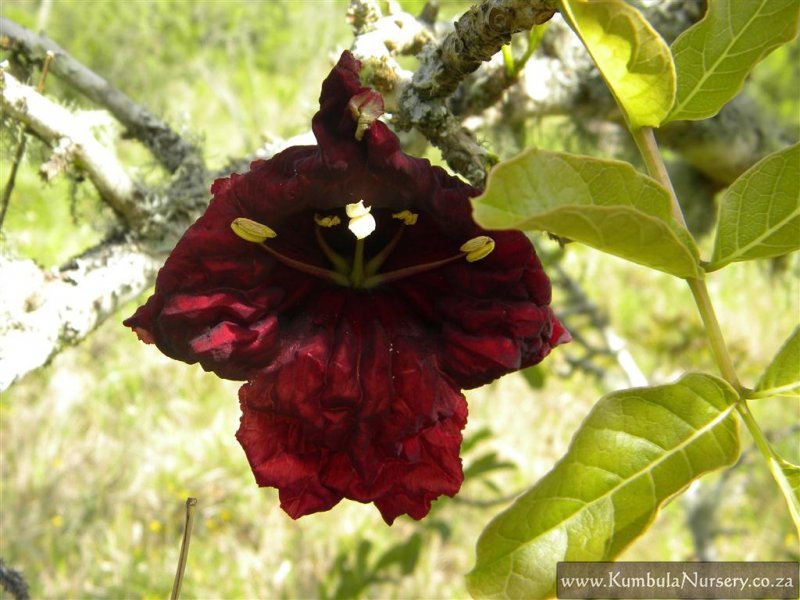
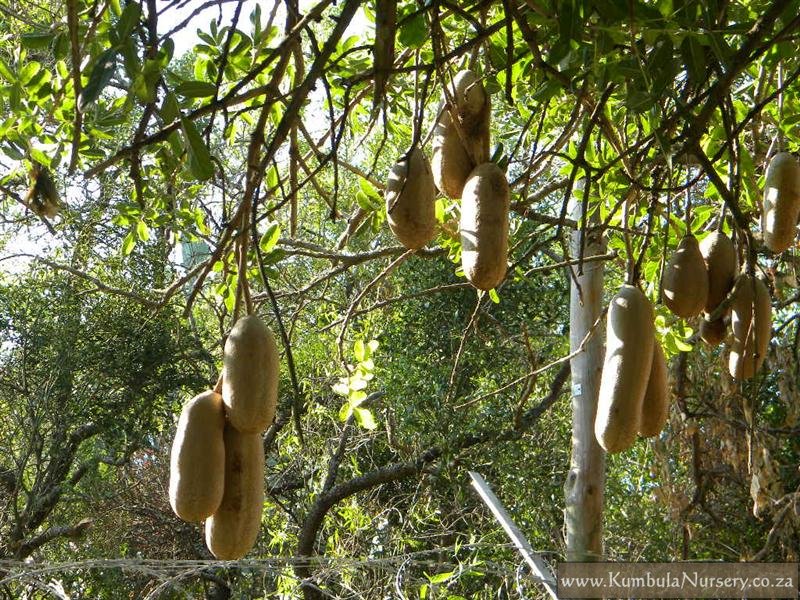
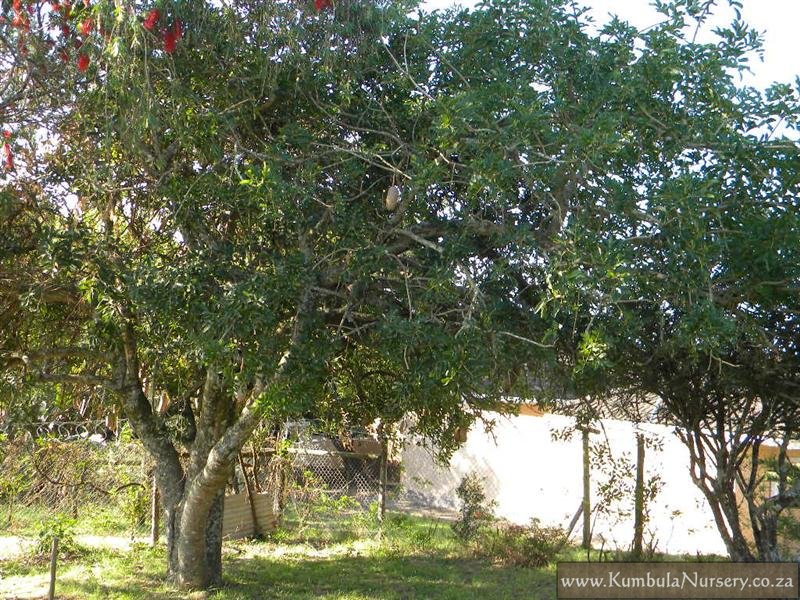
| Specific Information | Kigelia africana has a dense rounded to spreading crown. Take care where you plant it. The falling fruit is heavy and solid and can cause damage to cars or other property. The tree is also suitable for large estates, municipal parks and along rivers and dams on farms. An especially useful tree for game farms: the flowers draw many insects and nectar and insect eating birds, while duiker, kudu and impala eat the fallen flowers, baboons, monkeys, bushpigs and porcupines eat the fruit, fruit bats are thought to pollinate the flowers and Charaxes butterflies also visit the tree. |
|||||||||||
| Ad Break | ||||||||||||
| Flowers | ||||||||||||
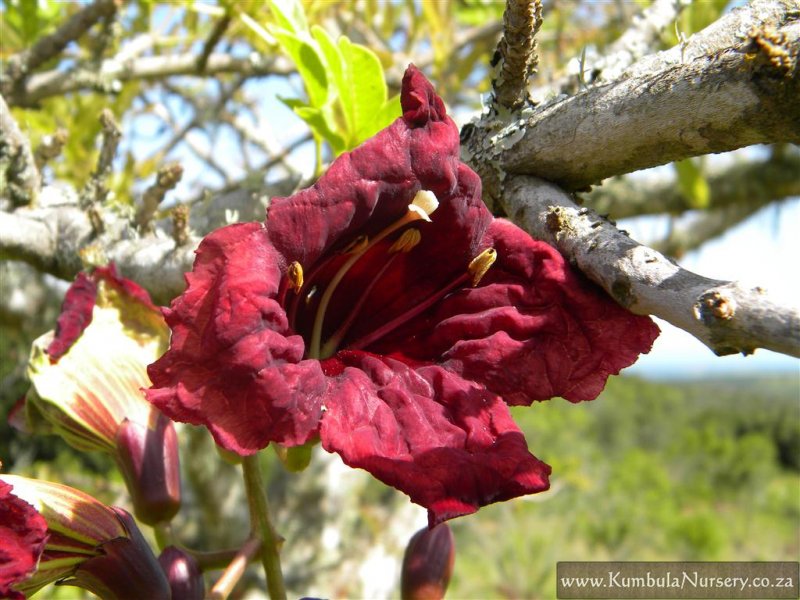
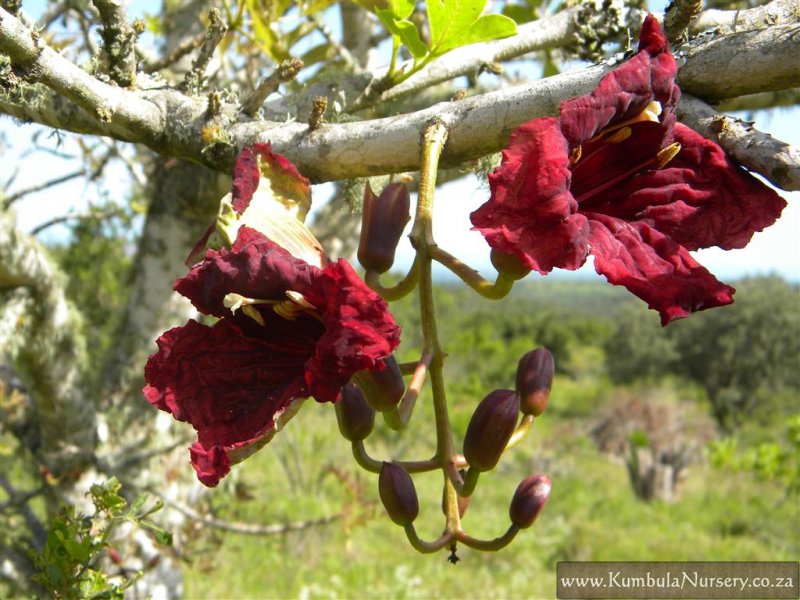
| Description | large, crumpled, trumpet-shaped blooms |
|||||||||||
| Season |
|
|||||||||||
| Colour |
|
|||||||||||
| Growth Rate |
|
|||||||||||
| Plant Uses |
|
|||||||||||
| Distribution and Habitat | from KwaZulu-Natal to Tanzania, on riverbanks, along streams, on flood plains and in open woodland |
|||||||||||
| Planting Suggestions | The old method of digging a deep hole and filling it with soil and compost has resulted in many trees failing to thrive, dying, rotting at the base or worse still, falling over in later years due to poor root development. Refer to the following sites for the best method of planting trees: International Society of Arboriculture: New Tree Planting Tree People: Plant the right way For those of you who have a clay problem try: |
|||||||||||
| Medicinal Uses | Ulcers, sores and syphilis are treated with preparations of the crushed dried or fresh fruits, which have antibacterial properties. The fruit is a strong purgative and causes blisters in the mouth and on the skin. The roasted seeds are eaten when food is scarce. The wood is tough and is used in Botswana and Zimbabwe for shelving, fruit boxes and dugout canoes. The roots produce a bright yellow dye.More recently, extracts from the fruits are being used as an ingredient in beauty products and skin ointments. |
|||||||||||
| Ad Break | ||||||||||||




Discuss this plant
Share knowledge, ask a question or give an experience.