

Kumbula Blog
Clivias: Poor flowering
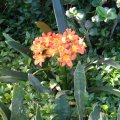
I received this email at the beginning of November last year (2014):
'My Clivias don't send up long stems with the flowers at the end. The flowers bloom at the base of the plant and as you can imagine, they are not an impressive sight.'
Read moreAcacia name change to Vachellia

I have been rather tardy in applying the change of name for Acacias. I am really not qualified to explain this change in taxonomy but from my (limited) understanding, there is a difference between the Acacias of Africa and Asia compared to the Acacias of Australia. Suffice it to say that the name Acacia has been retained for the Australian wattle, while in Africa, the name Acacia has been replaced in most cases by Vachellia and in others by Senegalia.
Read moreVachellia xantholophaea: Is this really the best choice for my small garden?
Many of us will recall the words from Rudyard Kipling's story of The Elephant's Child, who was told by the Kolokolo bird to 'Go to the banks of the great grey-green, greasy Limpopo River, all set about with fever-trees,....'.
Why Fever tree? It was a common occurrence for early travelers and pioneers to contract a bad fever when traveling through areas where the trees grew and the trees were thought to be the cause of the fever. Of course we now know that the fever was Malaria,...
Read moreSuitability of Acacia xanthophloea for dry climates and other points of interest
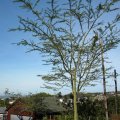
I received a query from a farmer in Namaqualand, an arid to semi-arid region of South Africa situated along the western coast, regarding the suitability of Acacia xanthophloea as a shade, stock feed and ornamental tree. This species has gained enormous popularity in the past few years and is now grown successfully in a number of varying habitats across South Africa. Despite the Fever Tree's adaptability to different climatic conditions, however, it is good practice to consider both the...
Read moreTransplanting my Scadoxus
It was coincidental that, a short while after I had taken photos of how I transplanted my Scadoxus, I received a query from Rosemary asking how to plant Scadoxus.
Scadoxus should be transplanted in late autumn or early winter, after all the leaves have died down. Unfortunately my planning seldom coincides with reality. Half way through September I impulsively decided to move some of my Scadoxus into a new bed that I was building. I wanted them to have a really good start, considering...
Read moreHaving fun with Mesembryanthemum fruit capsules
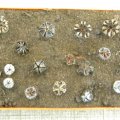
If you have ever tried to extract seeds from a dried fruit capsule of a member of the Mesembryanthemum family, you will in all likelihood have suffered a couple of broken nails and a fair amount of frustration. Mother Nature shows us how it's done....
Read more



