| Botanical Name |
|
| Family |
Asteraceae - The daisy family. |
| Pronunciation |
|
| Common Name(s) |
English: African wormwood
Afrikaans: Wilde-als; Bitterals
Sesotho sa Leboa: Lengana
|
| Plant Group |
- Perennial A plant whose life cycle lasts for three or more seasons.
- Shrub A woody plant of relatively low height, having several stems arising from the base and lacking a single trunk; a bush.
|
| Plant Size |
- Medium
| Tree | 10m to 16m |
| Shrub | 1m to 2m |
| Perennial/ground cover | 40cm to 60cm |
| Bulb | 40cm to 60cm |
| Succulent | 40cm to 60cm |
|
| Position |
- Sun The area is in full sun for all or most of the day, all year round.
|
| General Information |
- Drought Tolerance: Moderate The plant is moderately adapted to arid conditions and can survive short periods of drought and high temperatures without extra water.
- Evergreen Plants that have leaves all year round.
- Fragrant / Aromatic These plants posses a strong, usually pleasant odour.
- Frost: Half-hardy The plant is able to survive low temperatures and some frost but requires protection against severe frost.
- Prune hard after flowering Fast growing shrubs that grow lanky within a season. Cut off branches and stems of these plants to a third of their original length. This will increase the yield of flowers, improve the plants shape and enhance the structural strength of main branches.
- Water Moderate These plants will need some extra watering compared to water-wise plants. Plant them together, in at least some shade and in a convenient proximity to the house so that grey water can be utilised during times of drought.
- Wind Tolerant Plants able to withstand the effect of strong winds.
|
| Specific Information |
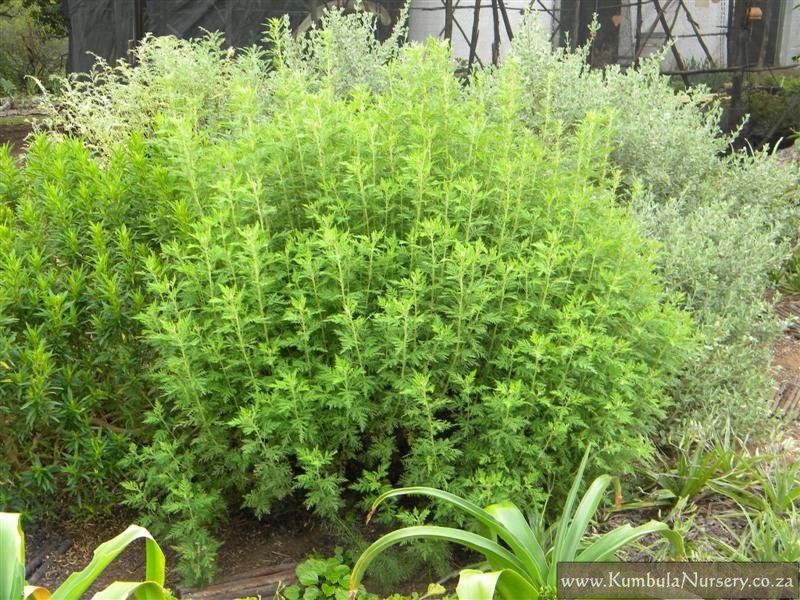
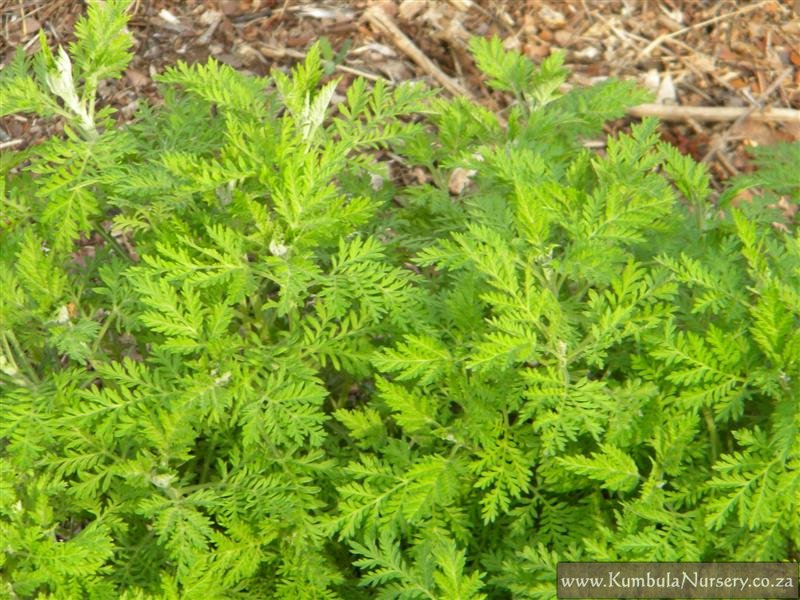
Artemisia afra is a tough and easy-to-grow species which adds texture and colour with its finely divided, silver-grey, aromatic foliage. Growth habit can be somewhat untidy, but it responds well to pruning to shape. The lower branches become woody with age and the plant may need to be replaced after 3 to 4 years. A must for the herb garden and useful in shrub borders.
|
| Ad Break |
|
| Flowers |
| Description |
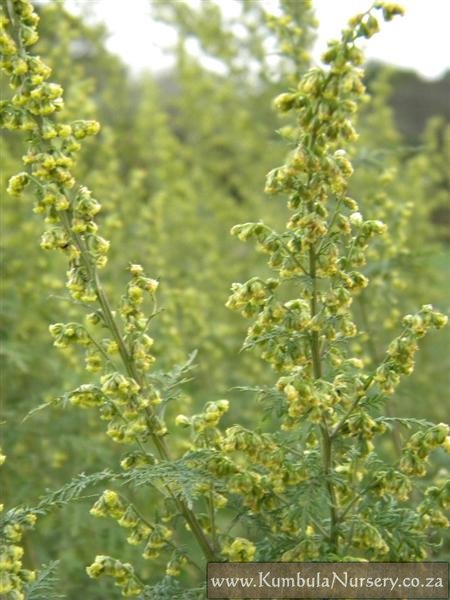
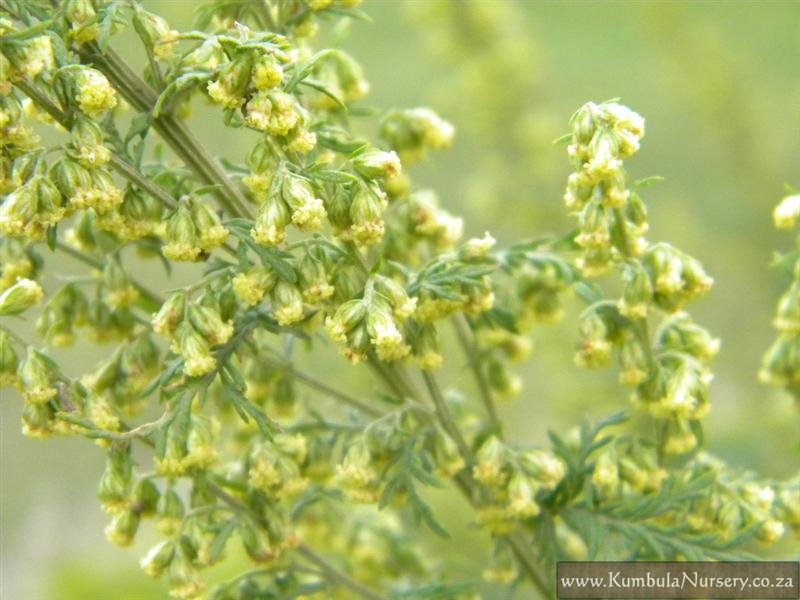
tiny, crowded at ends of branches
|
| Season |
- Autumn Plants will seldom bloom for the entire season as given in the list, but should flower during a period within these parameters.
|
| Colour |
|
| Growth Rate |
- Fast Specifying growth rate can be very misleading as there is considerable variation of growth rate depending on type and species of plant, available water, supplementary feeding, mulching and general care, as well as the plants suitability and adaptability to the garden environment.
|
| Plant Uses |
- Attracts bees, butterflies or other insects This plant attracts insects which can be food for birds or other creatures in your garden.
- Border A strip of ground, at the edge of a driveway or path in which ornamental plants or shrubs are planted.
- Filler Either a fast growing tree or shrub used temporarily to fill in an area while the permanent plants grow to a desired size, or a plant used to fill gaps in borders or beds.
- Foliage Plant Plants grown because their foliage is colorful or unique. Many of these plants have insignificant flowers.
- Pioneer for new gardens A very fast growing plant, able to withstand hardship, that can be used to populate land that has recently been cleared of natural vegetation. These plants pave the way for slower-growing species by adding nutrients to the soil and creating leaf litter.
- Suitable for coastal gardens Plants adapted to dry, sandy soil, forceful wind, limited rainfall and intense sunlight.
- Suitable for smaller gardens Such plants do not have invasive root systems, remain small or controllable and can often be grown in containers.
- Wild Garden An indigenous garden planted for the benefit of wildlife and birds. Provides food, water, a variety of mini-biomes and no poisonous chemicals are used.
|
| Distribution and Habitat |
from the Cederberg Mountains in the Western Cape, in all provinces of South Africa except the Northern Cape, to tropical East Africa and Ethiopia, on damp slopes, and along streams and forest margins
|
| Planting Suggestions |
Artemesia will tolerate most soil types. Mulch to retain moisture around the roots. Grow with Leonotus varieties for an interesting effect. Prune hard in winter to remove woody stems and encourage lush new growth in spring.
|
| Medicinal Uses |
Artemisia afra is one of the oldest known medicinal plants. It is much used for coughs, colds, earache, worms, fever, loss of appetite, colic and headache. Fresh leaves inserted into the nostrils will clear blocked nasal passages and leaves placed in socks are said to be a remedy for sweaty feet. The roots, stems and leaves are used in enemas, poultices, infusions, body washes, lotions, smoked, snuffed or drunk as a bitter tea.
|
| Ad Break |
|







Comments
Recipe for ear and blood cleanser tonic
Kindly email me a recipe for a tonic for curing earaches, and blood cleansers made of umhlonyane please. I need it for my 6 year old kids, and myself as well.
thank you
Medical use
Hi Vangila
I have no information about how to prepare the plant for use. You would have to speak to a herbalist or traditional healer for this.
Kind regards
Lorraine
Discuss this plant
Share knowledge, ask a question or give an experience.