

Bolusanthus speciosus


| Botanical Name | Bolusanthus speciosus |
|||||||||||
| Family | Fabaceae - The legume and pod-bearing family. (Pea & Bean Family) |
|||||||||||
| Pronunciation | bo-luh-SAN-thus spee-see-OH-sus |
|||||||||||
| Common Name(s) |
English: Tree wisteria; Elephant Wood
Afrikaans: Vanwykshout; Olifantshout
IsiZulu: umHolo
Sesotho sa Leboa: mogaba; Kgomonahlabana
Setswana: Motsokophala
Tshivenda: Mukambana; Muswinga-phala
|
|||||||||||
| Plant Group |
|
|||||||||||
| Plant Size |
|
|||||||||||
| Position |
|
|||||||||||
| General Information |
|
|||||||||||
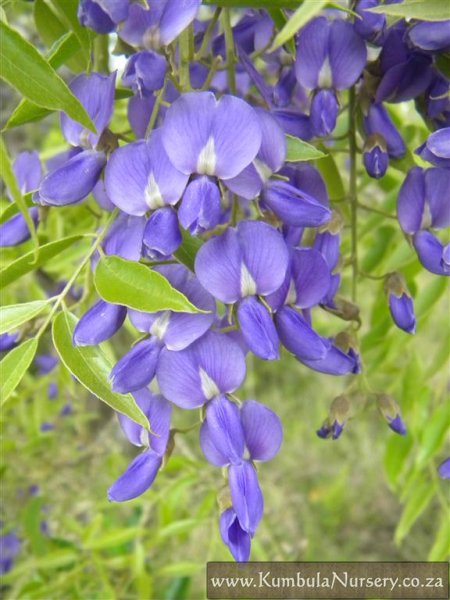
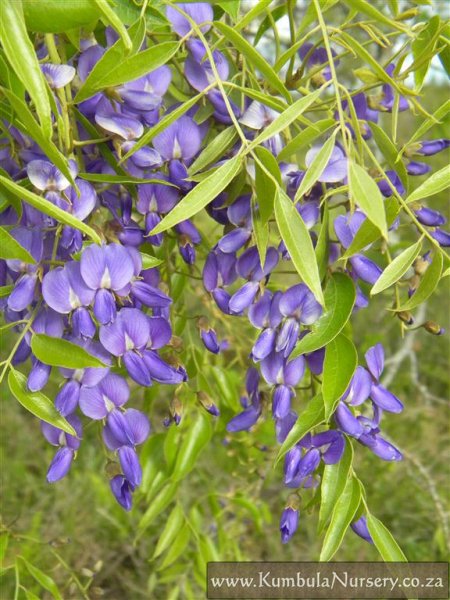
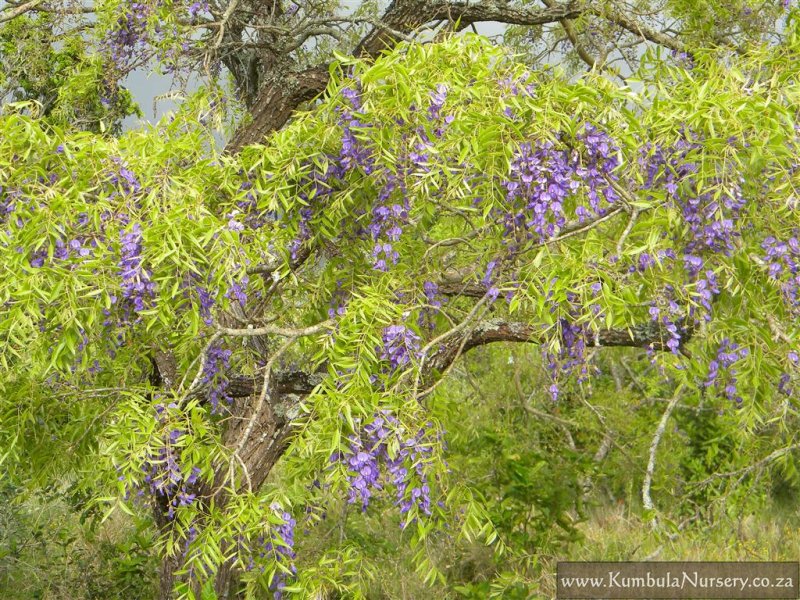
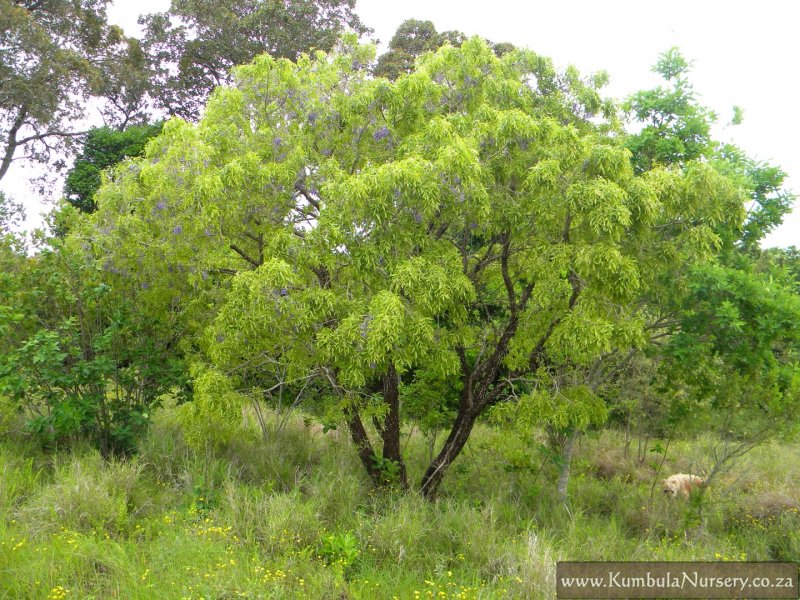
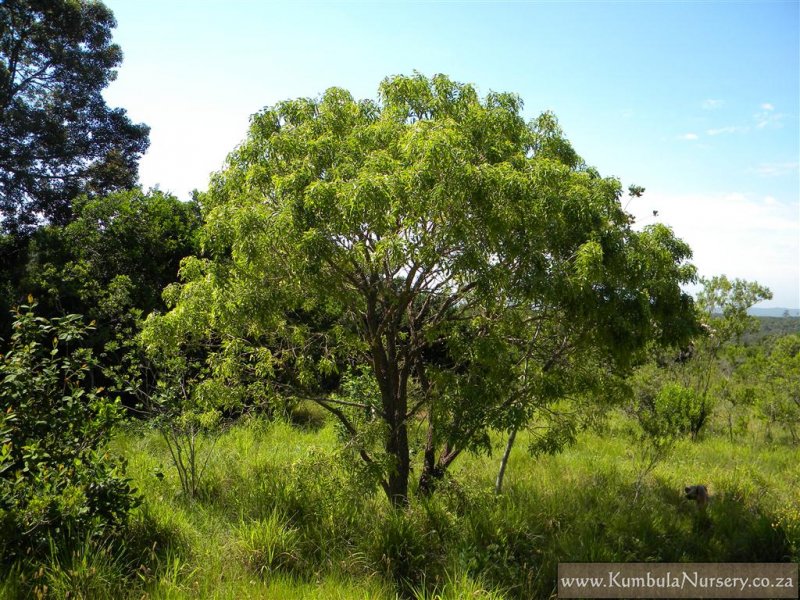
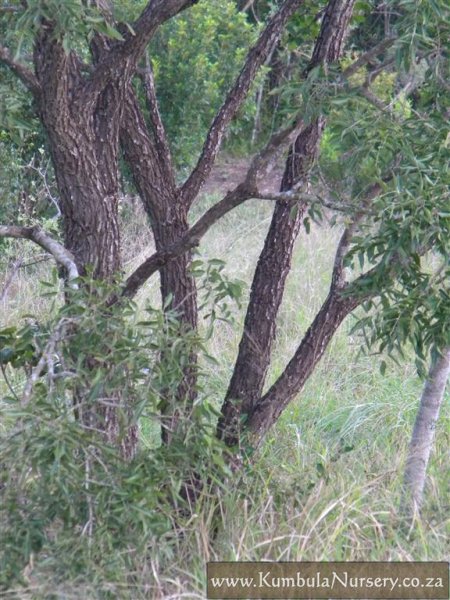
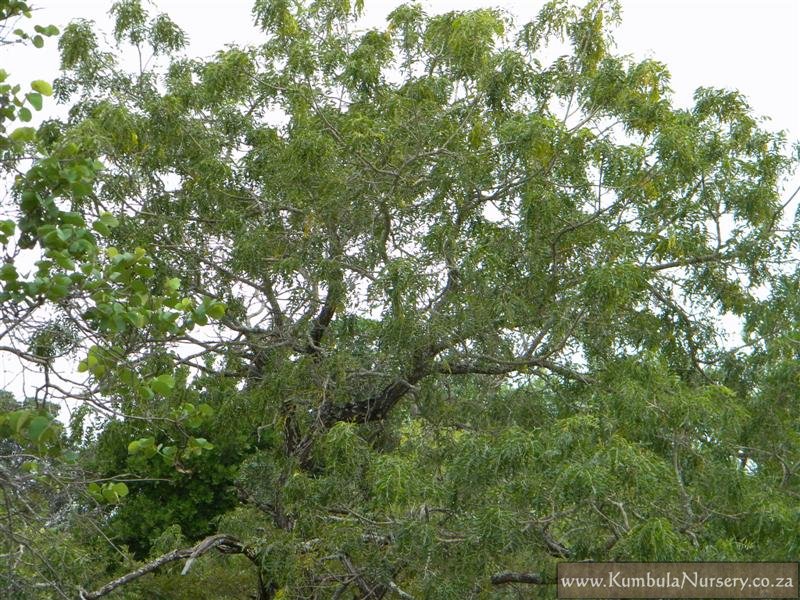
| Specific Information | Bolusanthus speciosus is a multi-stemmed tree with beautifully fissured bark and drooping foliage that shivers in the slightest breeze. It can be grown in a medium to small garden, as well as in a container. It will withstand moderate frost if it is protected for the first 2 to 4 years, depending on the amount of frost it has to sustain. The specimens shown above have grown with minimal water in the Eastern Cape and are in no way as spectacular as those grown in more suitable conditions. Plant the tree where it will get protection from the worst of the wind - the flowers on my trees often get blown off before they have opened. The branch structure, bark and attractive foliage make this tree a must - the stunning flowers are an extra. Bolusanthus speciosus is a protected tree, meaning that removal, cutting or damaging of wild specimens is prohibited. |
|||||||||||
| Ad Break | ||||||||||||
| Flowers | ||||||||||||
| Description | pea-flower |
|||||||||||
| Season |
|
|||||||||||
| Colour |
|
|||||||||||
| Growth Rate |
|
|||||||||||
| Plant Uses |
|
|||||||||||
| Distribution and Habitat | from KwaZulu-Natal to Mpumalanga, Limpopo and Northern Province, into Angola and Zambia, in wooded grasslands |
|||||||||||
| Planting Suggestions | Bolusanthus speciosus should be watered regularly and well for the first 3 or 4 years to promote sturdy and speedy growth. The old method of digging a deep hole and filling it with soil and compost has resulted in many trees failing to thrive, dying, rotting at the base or worse still, falling over in later years due to poor root development. Refer to the following sites for the best method of planting trees: International Society of Arboriculture: New Tree Planting Tree People: Plant the right way For those of you who have a clay problem try: |
|||||||||||
| Medicinal Uses | The roots are used to relieve stomach problems and abdominal cramps are treated with the inner bark. The wood is sought after for making furniture and small household articles. The wood is very hard and termite resistant and has been used for fence posts. |
|||||||||||
| Ad Break | ||||||||||||




Comments
Bolusanthus speciosios
Can you do cuttings of this tree to try to get flowering sooner?
Seeds of Bolusanthus
When do these trees produce seeds and can the trees be grown from cuttings.
Please let me know.
Bolusanthus speciosus
Hello Ken
I have no experience of growing this tree from cuttings and none of my sources indicate that Bolusanthus can be grown from cuttings or truncheons. If you can get a good sized truncheon to root, then it would most probably flower sooner than if planted from seed. I have however found that some of our indigenous trees will take from a cutting, but fail to develop a strong root system, resulting in a stunted, small tree. As this tree is found naturally in more tropical areas, it may help to feed it with a top layer of good compost, add some organic fertilizer, cover the ground below with a thick layer of mulch and water it deeply two to four times a month in spring and summer, (less in winter), depending on the area in which you live.
Bolusanthus
Thanks, I was only wondering because it said that it takes 7 to 15 years to flower that will put me in my 70s can I wait that long? Lol
Tree wisteria
I'm much in the same position. All I can say is that although my parents may not have seen the fruits of their labour, I am indebted to them for their foresight in planting many indigenous, slow growing trees in their/my garden.
I researched 20-odd sites and books for data to support the flowering age of Bolusanthus and found no mention of the time taken to flower, an unusual omission of a potentially pertinent fact. The tree belongs to the pea family which normally flower from quite a young age. Hopefully yours will too.
tree wistaria.
Hi. I planted one of these about a year ago. It is very healthy but has grown one metre-long soft shoot which is showing no sign of hardening up into any form of trunk. I was hoping to turn this into the leader. Must I just stake it and wait? at the moment it looks like a shoot from a wistaria climber!
Young tree wistaria
Hi Marion
Without a bit more information or a picture, it is a bit of a stab in the dark to give you good advice. Are there any other shoots from the base or side shoots up the stem, or does the plant consist of just the one main stem?
In general, I would definitely stake the shoot until it is sturdy. I would also remove any leaves from the lower 15 cm of the main stem, as well as any shoots coming from the base. To encourage side branching, I would probably pinch off the growing tip of the shoot.
I hope this gives you some guidance but if you are unsure, send a picture or give me a bit more information.
Kind regards
Lorraine
tree wisteria
Hi, I'd really like to get hold of a tree Wisteria or two! What BEAUTIFUL plants! Any ideas on suppliers???
Thanks!
Tree Wisteria
H Tersia
Please let me know where you are so that I can try to source a supplier in your area.
Thanks
Lorraine
Planting Bolusanthus speciosus
Hi~
I'm Luke living in Taiwan.
I've got a young tree.
However,it can be only planted in container.
The question is that how big the container should I use.
And if I plant it in container,will the tree get flowering sooner or later?
BTW,
Considering the subtropical climate in Taiwan (Taipei),
any suggestions could you give?
Thank you~
planting this kind of tree
Hello, I'm Luke from Taiwan
I'd like to ask for any suggestion about planting Bolusanthus speciosus in a container in Taipei Taiwan where has a subtropical climate.
How big should the container be?
And how to take care of the tree?
Will it make any influence on getting flowering? (sooner or later?)
Looking forward to your reply, tks
sincerely, Luke
Bolusanthus speciosa - container
Hi Luke
The Tree wisteria has great potential as a container plant: interesting bark and shape, lovely flowers and leaves that shiver in the slightest breeze. Your climate is ideal as it is much the same as the climate in which this tree grows naturally.
I have not grown this plant in a container myself, but if the bonsais of the Tree Wisteria are anything to go by, you could probably plant the tree in any size container. My choice would be a really large container, 50 to 60 cm tall and wide at the top, rather than narrow. It really depends on how much space you have.
As to how long it will take to flower, I really can't say one way or the other. This is a member of the Pea and Bean family and they usually flower when quite young.
I found a most informative site that gives clear instructions and suggestions for the growing and care of trees in containers at:
books.google.co.za/books?isbn=1889538299 - (go to page 46)
I hope this is helpful and that your tree thrives.
Regards
Lorraine
Tree Wisteria in winter?
Will the tree wisteria survive the winter months of New York? I think this plant will make the neighborhood look great.
Tree Wisteria in New York?
Hi Dusty
As much as I would like to give you a positive answer, I think that the low winter temperatures of New York could be an issue. The native habitat of the Tree Wisteria is specifically sub-tropical. I compared the average minimum temperatures for Zambia, Zimbabwe and the relevant South African provinces. Temperatures in these areas seldom, if ever, reach 0 degrees C, with the average lows being between 4 and 6 degrees C. Also absent from these areas are icy winds which would be further detrimental to the tree's survival.
If covered during the first three winters, you may be able to establish a specimen that is able to survive. Subsequently however, if the cold does not kill it, its growth would almost certainly be stunted and flowering ability would be severely impaired.
Kind regards
Lorraine
Bolusanthus transplanting??
Hi Lorraine, I am in southern California. We have a climate that is similar to various parts of SA. I have a Bolusanthus tree (grown from seed) that is about 10 years old, It's only about 1.5m tall. I am thinking of transplanting it, during our winter (November-January), which is cool and sometimes wet (but not extreme). I am not sure about how deep the roots might be. If this is a tap rooted, or deep rooted tree, I won't attempt to move it. I definitely do not want to kill it! Any advice or experience? BTW- many South African plants have found a home in California because the climate is very conducive. Agapanthus and Hemerocallis are all over the place. I also grow Watsonia, Babiana, Leucadendron, Leucospermum and Anisodontea. Thanks for your help!
Transplanting Bolusanthus
Hi Glen
Although I have not attempted this, I do think it is possible to do successfully. This tree does not have an invasive or particularly large root system. If care is taken to conserve the root ball and provide sufficient after-care, the chances of a successful transplant are good - there are never any guarantees, unfortunately.
There are a number of articles you can peruse to get information about removal, replanting and after-care of mature trees that will increase your chances of success - Google: 'transplanting trees'
I have used the following sites before:
http://landscaping.about.com/cs/shrubsbushes/ht/transplanting.htm
http://www.clemson.edu/extension/hgic/plants/landscape/shrubs/hgic1055.html
http://www.treeboss.net/transplanting_trees.htm
Climates in California, Florida and many parts of Australia have proven to be ideal for many South African plants. In fact, when doing my research, I often have to use information from other parts of the world as the information is simply not available in South Africa. Historically, many South Africans have tended to take our plants for granted and have shown little interest in growing indigenous. With temperatures rising and water availability lessening however, interest in growing indigenous plants has made a positive swing.
Wishing you all the best in moving your tree.
Kind regards
Lorraine
Bolusanthus speciosus and Wisteria floribunda
Hi. I am confused by these species' names. Are these plants actually the same?
I did try many times to grow Wisteria Floribunda and Wisteria Sinensis from seeds, but all failed. I think more probably due to my location and climate. Btw I living in Malaysia. I'm wondering if maybe I can grow African tree wisteria for my climate? Any idea?
Thanks
Regards,
Humphrey
Bolusanthus speciosus suitability for Thailand
Hi Humphrey
No, these plants are not the same at all. The Wisterias are climbers from China and Japan and Bolusanthus speciosa is a tree from South Africa.
I am not too familiar with the climate in Thailand, other than it being tropical and very hot and humid for most of the year. The tree Wisteria might grow successfully in Thailand but I think the weather will be too humid, too hot and too wet.
Kind regards
Lorraine
Growth rate
Hi, I bought one in January this year and live in nth Queensland Australia. Have planted in pot as wasn't sure if it was invasive or how fast it grew. It was grown from seed and do far is 1/2 metre high. So doubled it size since I bought it. Do you know how long they take till they flower. This plant is staked a skinny. Thanks Tracy
First flowering
Hi Tracy
Apologies for taking so long to reply to your query.
Unfortunately I cannot say to how long it will take to flower but as this is a member of the Pea and Bean family, it is likely to flower when reasonably young - perhaps three to four years.
Kind regards
Lorraine
Thank
Thank you for your reply :)
bolusanthus
I bought one in a 40l bag beginning of October (spring) and it was in flower. Admittedly it was trucked in from pretoria.
Age at flowering
Hi Ian
Thanks for your comment. My apologies for the tardy reply.
I have had a couple of queries about when it will flower. Judging from the size of the bag, I would imagine the plant was about three or four years old?
Kind regards
Lorraine
Bolusanthus speciosus
Hi, love this tree and just wondering if any part of the tree is poisonous to children?
Is Bolusanthus speciosa poisonous?
Hi Chris
My apologies for not replying to your query.
I have come across no data as to any part of the tree being poisonous.
Kind regards
Lorraine
Time to flower bolusanthus speciosus
Takes 2 to 4 years to flower. Awesome bonsai
How do I encourage a seedling to form into a tree?
I have a Bolusanthus Speciosus seedling approx 9 months old and planted in the ground, I have staked it to approx 1.5 meters and the tendril is approx 1 meter longer than the top of the stake. The trunk is not strong enough to hold the tree upright so the top part is gently bent and appears to be getting longer by the day. My question is how do I get it to thicken at the base and form into a tree? I live in Nth Qld, Australia, Thank you for any advice you can give me.
Lanky seedling
Hi Julie
Much as I don't like fiddling with seedling trees, this does sound a bit overboard. If it were my tree I would cut it back to half its height.
Kind regards
Lorraine
Bolusanthus speciosus and relative
Just a follow-up comment/info on Bolusanthus speciosus: I never transplanted my tree, but it had a nice growth spurt this past summer. Then the leaves started to die. By the time I identified the problem ALL of the leaves were gone, and some stems/twigs were dying. As it turns out, it had a Sophora Worm infestation!
The Sophora Worm often defoliates plants in the pea family, Fabaceae.
"The genista caterpillar, Uresiphita reversalis (Guenèe), is the immature stage of a moth (Lepidoprera: Pyralidae) that occurs on Texas mountain laurel - Sophora secundiflora" (Drees and Jackman 1998). http://landscapeipm.tamu.edu/ipm-for-ornamentals/genista-caterpillar-on-...
http://extension.psu.edu/plants/green-industry/news/2012/pest-alert-geni...
Although Sophora secundiflora (Texas Mountain Laurel) is not commonly grown in California, a friend asked me to take a look at an unidentified tree in his yard that was dying. When I took a look, I thought it was a Bolusanthus, but the leaves were slightly different. I was puzzled because he said it was a beautiful tree with purple Wisteria-like flowers. Turns out it was a Texas Mountain Laurel, attacked by the Sophora Worm (as it is sometimes called). And this is what helped me to discover what was happening to my now recovering Bolusanthus!
Apparently, infestations by the Sophora Worm can vary from year to year. For whatever reason, we must have had the right situation in California to cause this. I hope this moth never gets to South Africa!
Bolusanthus speciosus in California
Hi Glen
Thanks for your interesting post. We have more than enough hungry caterpillars and beetles - we sure don't need another one!
Kind regards
Lorraine
Discuss this plant
Share knowledge, ask a question or give an experience.