| Botanical Name |
|
| Family |
Polygalaceae - The false legume family. |
| Pronunciation |
poe-LIG-ah-lah mer-tih-FOE-lee-uh |
| Common Name(s) |
Afrikaans: Augustusbossie; Blouertjie; Langelede
IsiXhosa: ulopesi; umabalabala
|
| Plant Group |
- Shrub A woody plant of relatively low height, having several stems arising from the base and lacking a single trunk; a bush.
|
| Plant Size |
- Small to Medium
| Tree | 8m to 15m |
| Shrub | 75cm to 1m |
| Perennial/ground cover | 20cm to 40cm |
| Bulb | 30cm to 40cm |
| Succulent | 20cm to 40cm |
- Small
| Tree | 4m to 8m |
| Shrub | 50cm to 75cm |
| Perennial/ground cover | 10cm to 20cm |
| Bulb | 20cm to 30cm |
| Succulent | 10cm to 20cm |
- Very Small
| Tree | 3m to 4m |
| Shrub | 25cm to 50cm |
| Perennial/ground cover | Up to 10cm |
| Bulb | 10cm to 20cm |
| Succulent | Up to 5cm |
|
| Position |
- Light or Dappled Shade Found below trees with sparse, open foliage. Ideal for the protection of herbaceous plants.
- Partial Shade The area is in shade for part of the day and in full sun for part of the day.
- Sun The area is in full sun for all or most of the day, all year round.
|
| General Information |
- Drought Tolerance: High The plant is well adapted to arid conditions; it can survive long periods of drought and high temperatures without extra water.
- Evergreen Plants that have leaves all year round.
- Frost: Half-hardy The plant is able to survive low temperatures and some frost but requires protection against severe frost.
- Salt spray tolerant A plant with specific adaptations enabling it to grow in a saline environment.
- Sand tolerant Plants adapted to survive in nutrient poor, very sandy soils.
- Water Wise Plant species originating from low rainfall regions that require less water to survive and thrive than other plant species.
- Wind Tolerant Plants able to withstand the effect of strong winds.
|
| Specific Information |
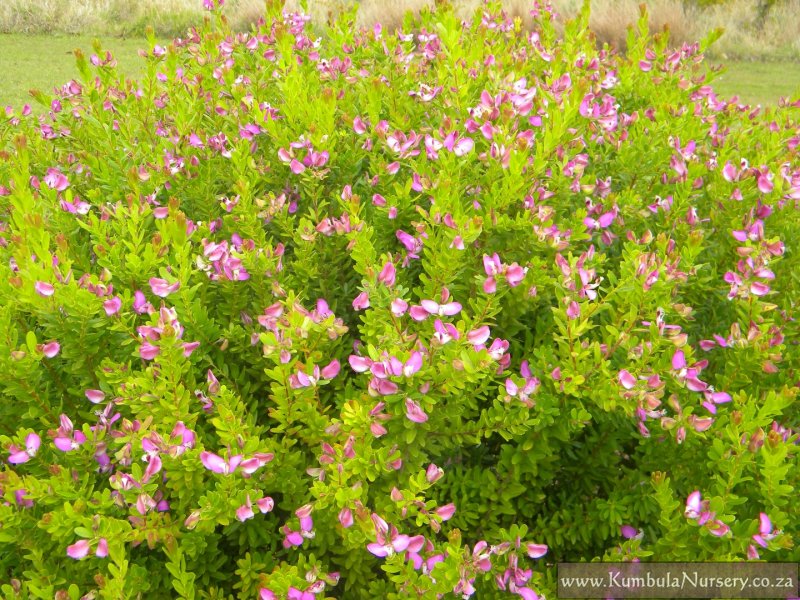
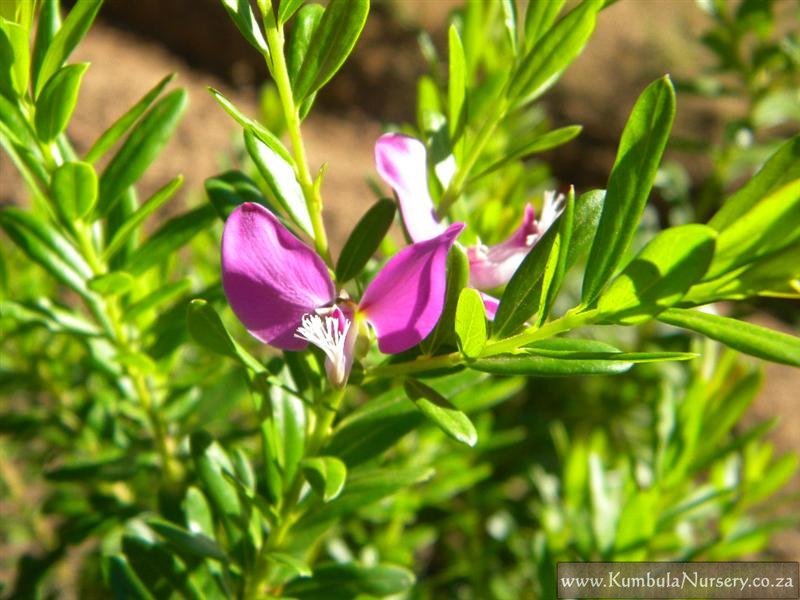
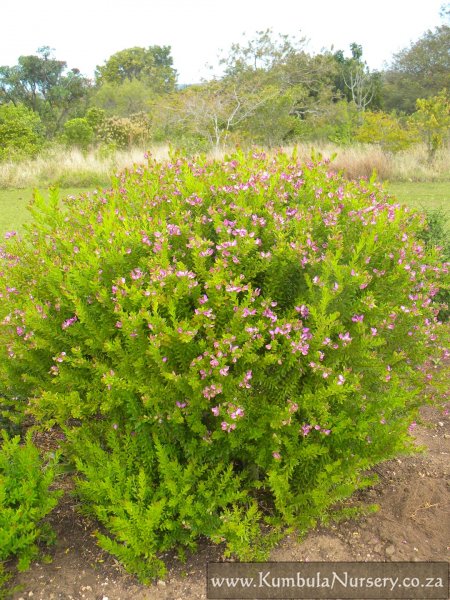
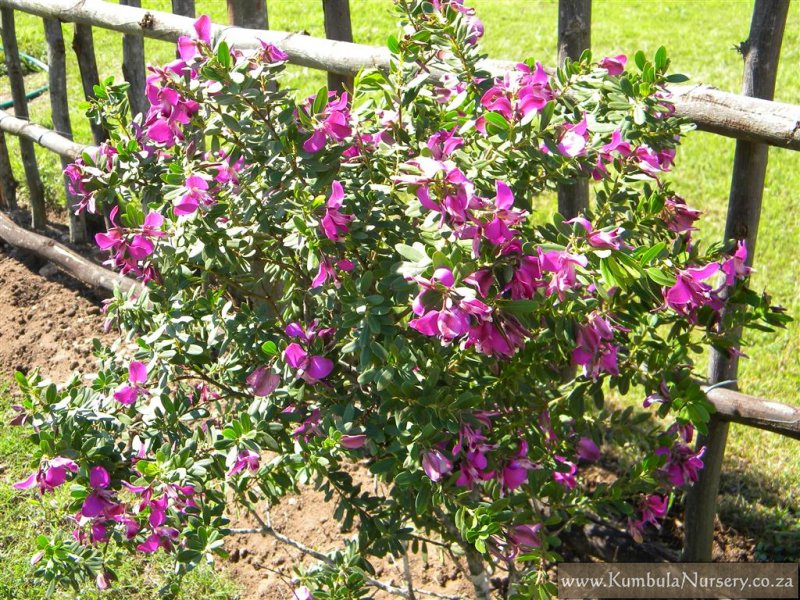
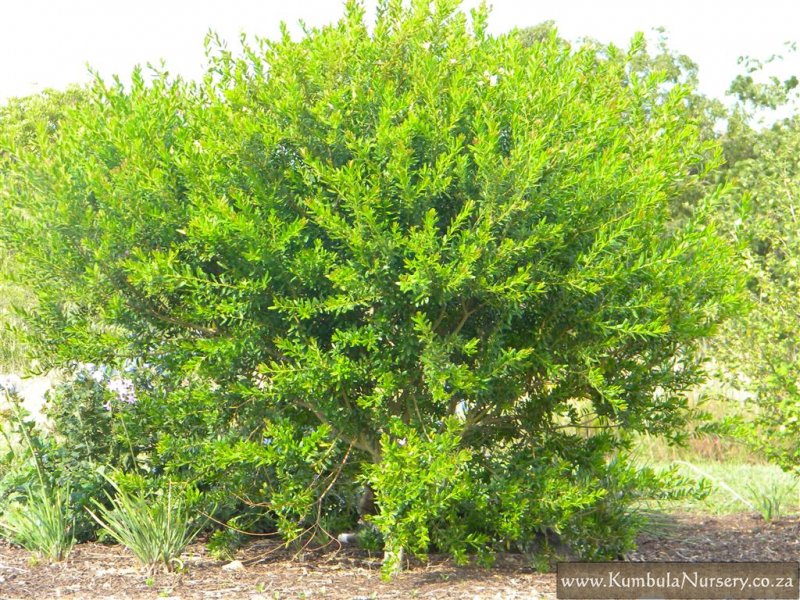
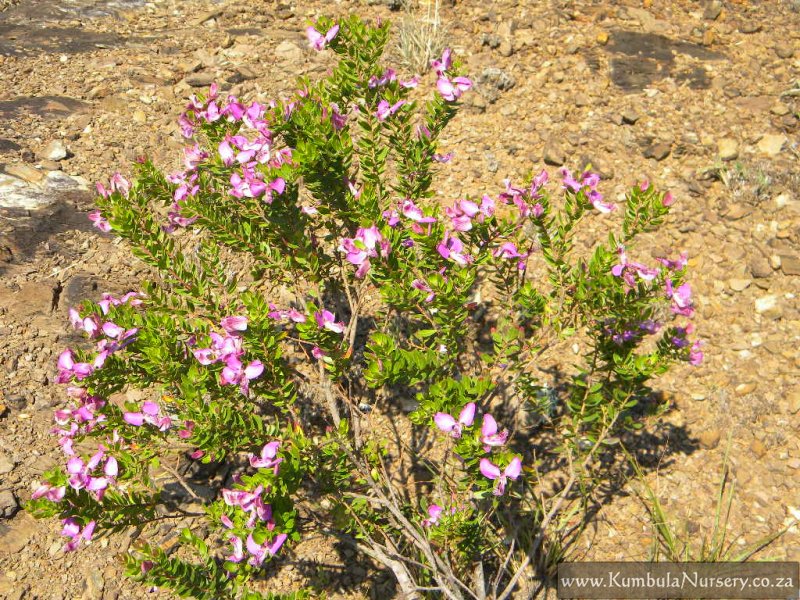
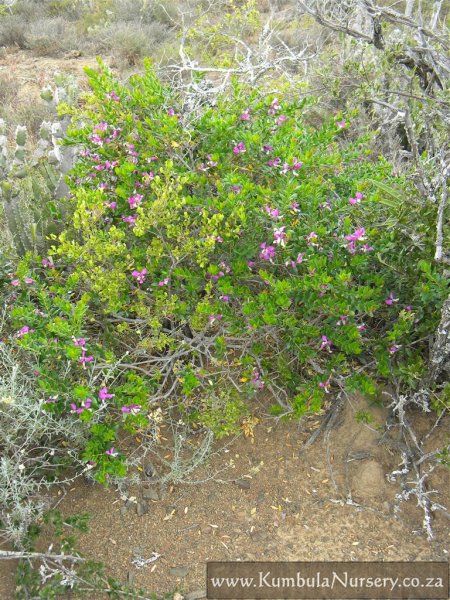
An attractive evergreen shrub that grows up to 2 meters, the September bush is able to adapt to most garden situations. It is fast growing, making it especially useful for new gardens. Polygala myrtifolia in the wild varies in form according to its habitat and distribution. In some areas it is a tough, loosely branched plant with relatively small, narrow leaves, while in others it is denser with larger, softer leaves. It flowers best in full sun, really dry conditions, poor soil and the least possible care - see natural habitat in photograph 6 above. Good in wild gardens, very dry gardens and exclusion zones
|
| Ad Break |
|
| Flowers |
| Description |
|
| Season |
- All Year Plants will seldom bloom for the entire season as given in the list, but should flower during a period within these parameters.
- Winter to Spring Plants will seldom bloom for the entire season as given in the list, but should flower during a period within these parameters.
|
| Colour |
|
| Growth Rate |
- Very Fast Specifying growth rate can be very misleading as there is considerable variation of growth rate depending on type and species of plant, available water, supplementary feeding, mulching and general care, as well as the plants suitability and adaptability to the garden environment.
|
| Plant Uses |
- Attracts bees, butterflies or other insects This plant attracts insects which can be food for birds or other creatures in your garden.
- Border A strip of ground, at the edge of a driveway or path in which ornamental plants or shrubs are planted.
- Filler Either a fast growing tree or shrub used temporarily to fill in an area while the permanent plants grow to a desired size, or a plant used to fill gaps in borders or beds.
- Hedge Suitable trees or shrubs planted relatively close together so that the branches intertwine to create a barrier. This can be formal – the plants are regularly trimmed to produce a neat shape, or informal – the plants are left to themselves to create a natural hedgerow.
- Pioneer for new gardens A very fast growing plant, able to withstand hardship, that can be used to populate land that has recently been cleared of natural vegetation. These plants pave the way for slower-growing species by adding nutrients to the soil and creating leaf litter.
- Rock Garden An area constructed of larger rocks, arranged naturally, to emphasise the use of stones as a main element. Generally plants used do not need a lot of care.
- Suitable for coastal gardens Plants adapted to dry, sandy soil, forceful wind, limited rainfall and intense sunlight.
- Suitable for seaside gardens Plants that will survive the hostile environment of harsh salty winds, dry sandy soil, irregular rainfall and heat found in seaside gardens.
- Wild Garden An indigenous garden planted for the benefit of wildlife and birds. Provides food, water, a variety of mini-biomes and no poisonous chemicals are used.
- Windbreak Trees planted in a row to form protection from prevailing winds by breaking the force of the wind, thereby reducing wind damage.
|
| Distribution and Habitat |
from the Bokkeveld Mountains in the Western Cape to Kwazulu-Natal, on dunes, rocky slopes, in forests, along streams, in scrub and open grassland
|
| Planting Suggestions |
The September bush will grow in most soil types. Polygala myrtifolia needs very little watering once established. It can be lightly pruned to shape, which encourages a more bushy habit and will keep it within bounds. Left to itself, growth is a bit more lax. Fewer flowers are produced in shady spots. Useful in areas that change from full sun in summer to semi- or full shade in winter.
|
| Medicinal Uses |
Polygala myrtifolia is known for its antibacterial, antimicrobial and antifungal properties.
|
| Ad Break |
|







Comments
Polygala Myrtifolia
There's no flowers on my polygala Myrtifolia.??? What do I've to do to make sure the plant flowers well.
Polygala myrtifolia - poor flowering
Hi Mala
Thanks for your comment. It brought to my notice that this plant needed some urgent up-dating. Read through the Specific Comments section of the plant information again to assess which plant you have, as I have added more information.
I have the same problem as you with the plants I grew from seed collected in the wild. I have come to the conclusion that the soil is too rich and I have provided too much moisture. Remove any mulch from around the plant and hold back all extra water. Prune lightly in autumn - don't wait until winter as late pruning will affect the spring flower crop. Try to mimic the environment in which it flowers well - see photo 6 above. Bear in mind that the flowering season is between August and September, depending on the prevailing climate. Only a few flowers will appear through the rest of the year.
If you have a nursery specimen, the supplier's instructions are to feed occasionally with 'organic fertilizer or 3.1.5 to encourage more flowers'.
I hope this information will be of use to you. Let us know your results next spring, good or bad. It is so useful to have feed back.
Thank you very much for your
Thank you very much for your detailed information. I shall attend to
what's necessary and will keepin touch!! Thank you again
Polygala Myrtifolia
Hi
Can I grow these in pots?
Will they flower if in partial shade?
Regards
Belinda
Polygala Myrtifolia in pots
Hi Belinda
I am pretty sure you could grow the September bush in containers. Make sure the soil in the pots drains well and is not too nutrient rich, otherwise all you will get is really lush foliage but no flowers. They should flower moderately if they get a little shade and quite dry conditions. Polygala only flower really well in full sun.
Kind regards
Lorraine
Many thanks for your info. I
Many thanks for your info. I will replace my nutrient rich growing medium with potting soil, now , after your advice.
Many thanks
Belinda
Polygala Myrtifolia
Hi,I reside in Kloof, KwaZulu-Natal and would like to plant some Polygala Myrtifolias in the garden. Kloof is situated in a subtropical summer rainfall area with a high rainfall during Oct to Dec. We also experience some evenings and mornings with heavy mist, being in the Mistbelt area. They will be planted a sunny area. Will this shrub be suitable for Kloof?
Lastly, can one acquire a variety that does not exceed approximately 1 meter in height?
Thanking you
Regards
Francois
Polygala Myrtifolia - Distribution and size
Hi Francois
I always hesitate to make definitive statements about whether a plant will definitely survive in a particular area, especially one in which I have no personal experience. That said, I refer to the research results which I have gathered from a variety of sources.
With reference to the information set out above, the distribution area for this plant includes KwaZulu-Natal, so you are within the area where the plant grows in the wild.
As to size, again referring to the information above, Polygala myrtifolia normally has a maximum height of around a meter. I have an eight year old specimen and it just tops a meter.
As mentioned in Planting Suggestions, Polygala will also respond well to light pruning, which will keep the plant bushy and prevent it from growing taller than you would like it to.
My conclusion is that the plant should thrive in your environment. Withhold watering and avoid fertiliser and compost (Planting suggestions) and there should be no problem.
There is a hybrid of Polygala myrtifolia called Polygala myrtifolia "Glentana" which is much smaller. My 6 year old specimen is full grown and is just over knee-high.
Hope this answers your questions.
Kind regards
Lorraine
root-system
What does the root-system of this plant look like? Can you plant it near to a fibreglass swimming-pool? If so, how far from it?
Root system of Polygala myrtifolia
Hi Louise
I have found the roots to be narrow, spread out and quite shallow. Even the older, thicker roots are not strong or in any way invasive. You can plant it as close as you like - perhaps far enough so that falling blossoms do not fall into the pool.
Kind regards
Lorraine
Polygala myrtifolia
hello, I live in southern Spain. I have a number of plants all in large pots.The weather here is variable between November & April, typically wet & can be very windy as we live on the coast. Between Late May & September there can be little rain & temperatures in the late 30's. Because of this I have installed an automatic irrigation system. Reading some of the previous comments I wonder if I am doing the right thing. During the wet months the system is shut down.Can you advise please, & will the salty & windy atmosphere be damaging?
Polygala myrtifolia in Spain
Hi Roy
Welcome to my website.
Polygala myrtifolia is quite at home in a Mediterranean climate. I believe you are wise to have installed irrigation for the summer months. Although this plant can stand severe drought conditions, the roots of plants in containers can get much hotter and drier than those of plants in the ground. Shutting off the system in winter makes good sense.
The rest of your queries are answered in the information above. Refer to:
General Information, Plant Uses and Distribution and Habitat.
Kind regards
Lorraine
P.S. If you have a picture of your plants in the containers, please share it with us.
Dry and yellow leaves
Hi,
I've enjoyed reading the previous comments but none have been helpful to our problem : we live in Paris, on the 5th floor, with a balconny full south!! So we have lots of sun and sometimes lots of wind. Our polygala was happy at the very beginning, then my partner prunned it rather abruptly and then the wind knocked the pot over, so it's re-potted. Now there are still a few flowers here and there, a few green leaves but we have an invasion of yellow leaves. I am wondering if it's dying?
I would appreciate any help,
Thanks in advance
Ailing plant
Hi Lizz
It does sound as though your plant may be dying. I would say that the pruning had little to do with this as I have pruned these plants quite savagely in the past without any negative results. I have transplanted a few of these shrubs and have had limited success with older plants, most of them reacting as you have described. Once the leaves started dying I found no solution to keeping them alive. I do hope your plant revives.
Kind regards
Lorraine
Polygala myrtyifolia
Hi,we have one of these plants 2 metres high and about six years old is it possible to move it without killing it we live in Ibiza.Spain.Will it have a big root system. Look forward to your reply. Thank you
Transplanting Polygala myrtifolia
Hi Bill
Sadly it is almost certain that the plant will die if you move it. These plants do not like to be moved. The root system is quite small in relation to the plant and this is possibly why the plant has difficulty in recovering. I have tried moving small specimens of about 30 cm with about a 30% success rate and have even had difficulties with very small plants where the root system is not disturbed at all. It would be better to try making cuttings from the existing plant or buy a new plant if they are available.
Kind regards
Lorraine
Discuss this plant
Share knowledge, ask a question or give an experience.