

Gladiolus dalenii - previously Gladiolus psittacinus
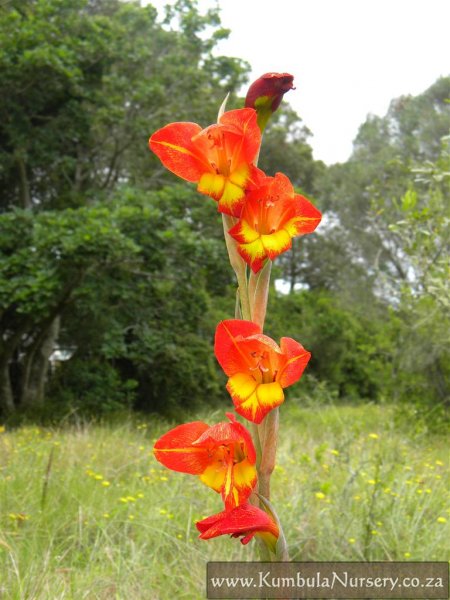
| Botanical Name | Gladiolus dalenii - previously Gladiolus psittacinus |
|||||||||||
| Family | Iridaceae - The iris family. |
|||||||||||
| Pronunciation | GLAD-ee-oh-lus duh-LEH-nee-eye |
|||||||||||
| Common Name(s) |
English: Parrot gladiolus; Natal lily
Afrikaans: Papegaai-gladiolus; Wildeswaardlelie
IsiXhosa: umnunge
IsiZulu: Isidwi Esibomvu; Udwendweni; Uhlakahle
Sesotho: Khahla-e-kholo
|
|||||||||||
| Plant Group |
|
|||||||||||
| Plant Size |
|
|||||||||||
| Position |
|
|||||||||||
| General Information |
|
|||||||||||
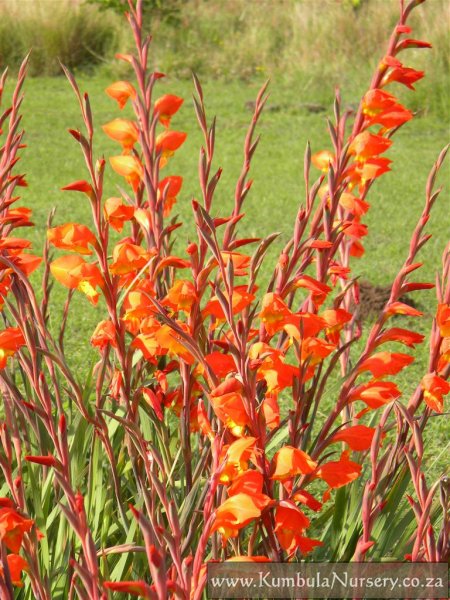
| Specific Information | Gladiolus dalenii can grow quite tall depending on its habitat and has erect, grey green leaves arranged in a loose fan. This gladiolus has adjusted exceptionally well to local conditions in the Eastern Cape and corms multiply rapidly. Mole rats do not appear to attack these corms. Grows strongly even when left to fend for itself amongst veld grasses in the wild garden. |
|||||||||||
| Ad Break | ||||||||||||
| Flowers | ||||||||||||
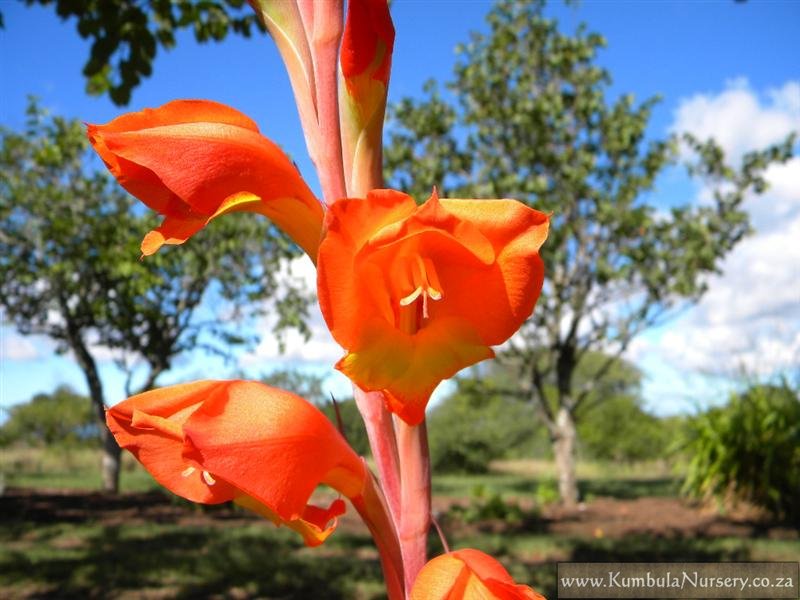
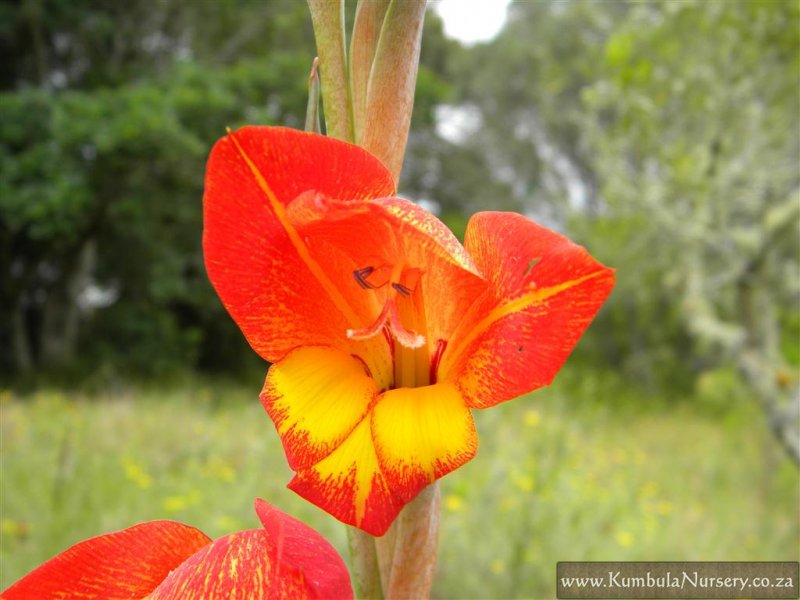
| Description | hooded gladiolus flower with a yellow throat |
|||||||||||
| Season |
|
|||||||||||
| Colour |
|
|||||||||||
| Growth Rate |
|
|||||||||||
| Plant Uses |
|
|||||||||||
| Distribution and Habitat | from the Eastern Cape to KwaZulu-Natal, Free State, Mpumalanga and Limpopo into Zimbabwe and Mozambique, in open grassland, woodland and scrub and in rocky areas, often among rocks along streams |
|||||||||||
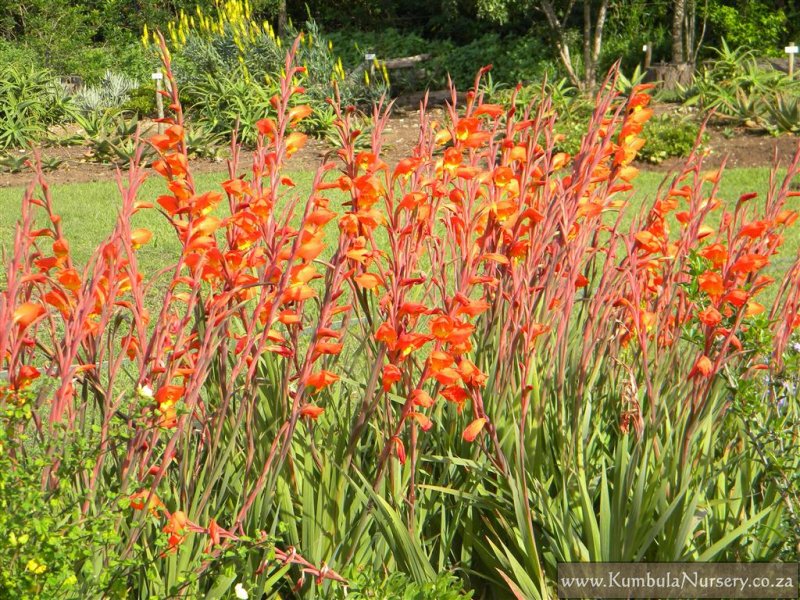
| Planting Suggestions | Plant the corms in any well-drained garden soil in winter. Plant in large, bold groups and water well during the summer months for optimum results. |
|||||||||||
| Lorraine's Garden Notes | I have found this Gladiolus to be exceptionally invasive, spreading itself throughout my wild garden and coming up all over my garden beds. It is extremely difficult to eradicate as the corms produce dozens of bulblets which fall off easily when removing the plant and resulting in a group of small plants where there was only one. They are very beautiful but when they come up among ground covers, in the succulent garden, on pathways - even in the nursery houses, they rather spoil the effect. The plant also sends out underground suckers making removal even less effective. I do make sure that all flower heads are cut off before the seed pods dry out as the seeds also have a very high germination rate. They make a stunning show when in flower but I do suggest that they be carefully monitored. |
|||||||||||
| Medicinal Uses | Gladiolus dalenii has been used to treat diarrhoea, chest ailments caused by sorcery, sterility in women, as good luck charms and in the horns used by inyangas/sangomas. |
|||||||||||
| Ad Break | ||||||||||||




Comments
Insect pests in indigenous gladiolus (dalenii)
Hi Lorraine,
I have the indigenous gladiolus growing in a pot in Durban. Produced lovely
flowers until I noticed that what appeared to be a type of wasp or fly
burrowing its way into the flower stems. I have since cut open a stem to find
what appears to be a "nest" of young insect hatchlings. Do you have any idea
as to what they can be and if there is a way of preventing them damaging the
gladiolus flowers?
Looking forward to hearing from you on this matter.
Regards
Patrick
Gladiolus fly
Hi Patrick
This would appear to be he Gladiolus fly, Epimadiza hirta. The adult flies are tiny, at 2 to 3 mm long, and lay their eggs in the calyx of the flower buds. When the maggots hatch from the eggs, they move into the buds to feed on the developing flowers. As they mature they bore down into the flower stem for about half a meter, resulting in damaged flowers or no flowers at all and hollow stems.
Sadly there is no insecticide available, presumably because the insects are so hidden that insecticide is unable to reach them.
Kind regards
Lorraine
Insect pests in indigenous gladiolus
Hi Lorraine,
Hmm....not good news it seems, as your description is spot-on.
Many Thanks
Patrick
Gladiolus fly
Hi Patrick
Not good news at all. My glads. were decimated this year - not a single plant (out of a couple of hundred) flowered this year and they all look sickly. Very disappointing. I have not had an invasion on this scale before. I wonder if it could be something to do with the very warm winter we had??
Kind regards
Lorraine
Discuss this plant
Share knowledge, ask a question or give an experience.